
TMJ Disorder Treatment
Root-cause physiotherapy for jaw pain, clicking, and TMJ dysfunction in Sarita Vihar, Delhi NCR.
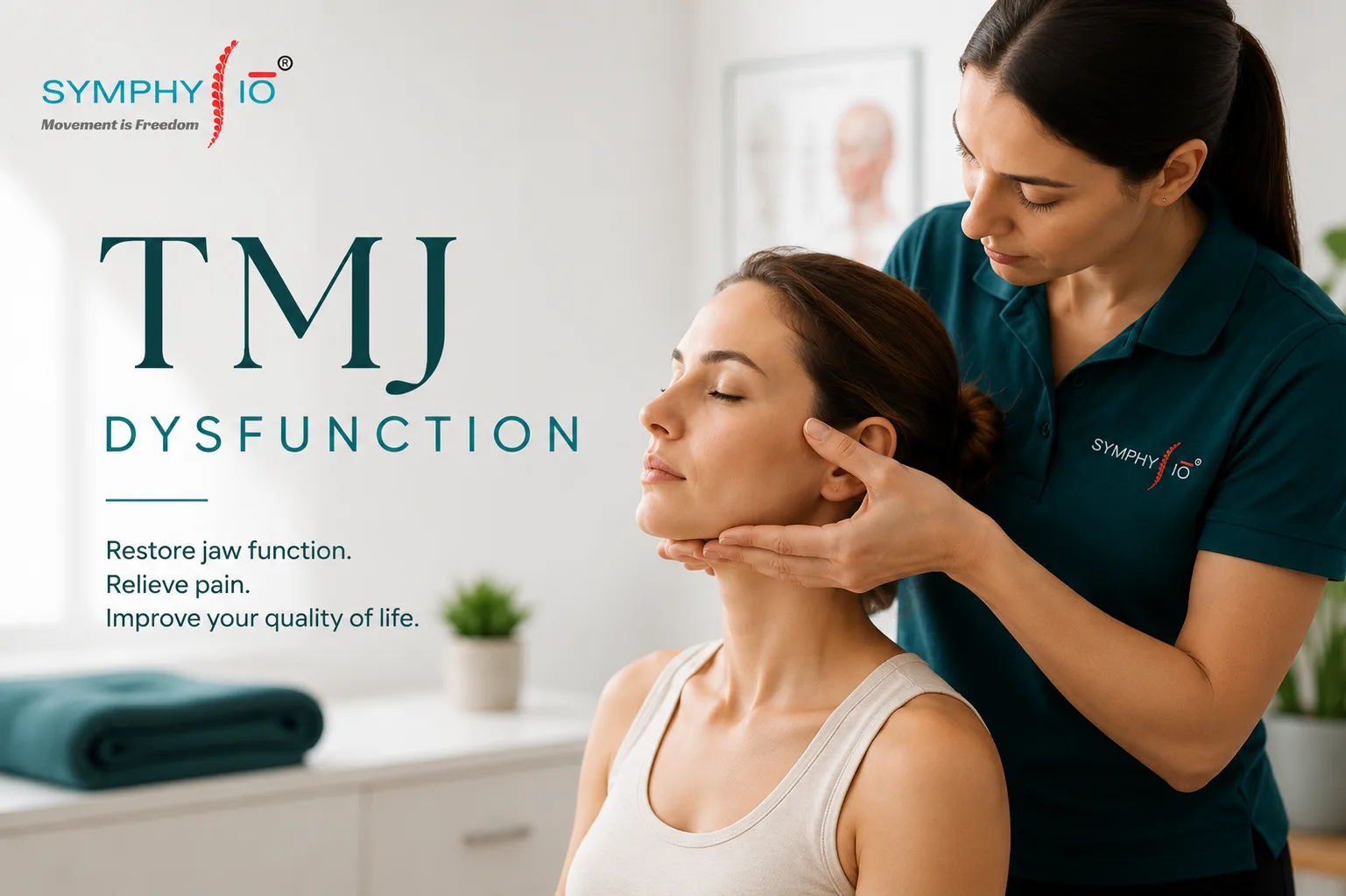
TMJ Disorder
What Is TMJ Disorder?
TMJ (temporomandibular joint) disorder refers to pain and dysfunction in the jaw joint and the muscles that control jaw movement. The TMJ is one of the most frequently used joints in the body — involved in speaking, chewing, and swallowing — and dysfunction here can cause pain that radiates into the face, ear, and neck.
TMJ disorder is closely linked with neck posture and muscle tension, which is why it's rarely treated in isolation. At Symphysio, TMJ assessment always includes a look at the cervical spine, since jaw and neck dysfunction frequently feed into and worsen each other.
Symptoms & Causes
Common symptoms include:
- Jaw pain or tenderness, especially with chewing or wide mouth opening
- Clicking, popping, or grinding sounds when opening or closing the mouth
- Limited jaw opening or episodes of jaw locking
- Facial pain, earache, or headaches linked to jaw tension
- Teeth grinding (bruxism) or jaw clenching, often stress-related
- Muscle tenderness around the jaw, temple, or cheek area
Common underlying causes:
- Jaw clenching or teeth grinding, frequently linked to stress
- Poor neck posture, which alters jaw mechanics and muscle balance
- Jaw injury or trauma
- Joint or muscle imbalance around the TMJ
- Prolonged one-sided chewing habits
- Malocclusion (bite misalignment) contributing to joint strain
How We Assess It
Assessment includes:
- Jaw range of motion measurement — how far and how symmetrically the jaw opens, and whether movement deviates to one side
- Palpation — of the jaw muscles and joint itself to identify areas of tenderness, tightness, or swelling
- Movement quality evaluation — assessing clicking, popping, or catching during jaw movement, and correlating this with symptom patterns
- Cervical spine assessment — since neck posture and TMJ function are closely interrelated, we always assess neck alignment and mobility alongside the jaw itself
This combined jaw-and-neck approach is central to effective, lasting TMJ treatment.
Our Treatment Approach
Treatment typically includes:
- Manual therapy — applied directly to the jaw and surrounding muscles to reduce tension and restore comfortable movement
- Jaw mobility and coordination exercises — specific movements to retrain smooth, symmetrical jaw function
- Postural correction for the neck — addressing the cervical component that often drives or worsens TMJ symptoms
- Stress and tension management guidance — practical strategies where clenching or grinding is a contributing factor
- Dry Needling — frequently used for the muscles of mastication (jaw muscles) when they're a primary source of tightness and pain
Where dental factors (such as bite alignment or a night guard) are relevant, we coordinate with your dentist as part of a complete treatment approach.
Benefits of Treatment
- Reduces jaw pain and improves comfortable jaw opening
- Decreases clicking and jaw locking episodes
- Reduces associated facial pain, earache, and headaches
- Addresses the neck-posture link that often drives TMJ symptoms
- Improves comfort with eating, speaking, and daily jaw function
- Reduces reliance on clenching-related muscle tension over time
Who Should Consider This / Contraindications
Physiotherapy is effective for most muscular and joint-related TMJ disorders, particularly those linked to muscle tension, postural factors, or mild-to-moderate joint dysfunction.
- Suspected joint fracture or recent significant jaw trauma
- Signs of infection
- Structural or dental causes requiring specialist intervention (such as significant bite misalignment) — best managed alongside your dentist
These cases should be medically evaluated (or dentist-coordinated, where relevant) before or alongside physiotherapy.
Frequently Asked Questions
Not necessarily — occasional clicking without pain is common and often doesn't need treatment. Clicking accompanied by pain, locking, or reduced jaw opening is worth assessing.
Yes, stress-related jaw clenching and teeth grinding are common contributors to TMJ symptoms. Our treatment can include practical guidance on managing tension alongside hands-on therapy.
Often both work well together — a dentist may manage bite alignment or night guards, while physiotherapy addresses jaw and neck muscle function and joint mobility. We can coordinate care where needed.
Many patients notice improvement within 3-6 sessions, though timelines vary depending on how long symptoms have been present and whether clenching or grinding habits are ongoing.
Yes — the neck and jaw are mechanically and neurologically connected. Poor neck posture can alter jaw mechanics, and jaw tension can, in turn, contribute to neck muscle strain. This is why we assess both together.
No, most cases improve significantly with appropriate treatment, particularly when muscle tension, postural factors, or mild joint dysfunction are the primary drivers rather than structural joint damage.
Generally, wide yawning, hard or chewy foods, and prolonged one-sided chewing should be minimized until your symptoms improve. Your therapist will give you specific guidance based on your assessment.
Yes, jaw muscle tension can refer pain into the temple and head region, contributing to headaches. Treating the underlying jaw dysfunction often reduces headache frequency as well.
This depends on the severity and pattern of your grinding — a dentist can assess and fit one if needed. Physiotherapy addresses the muscular and postural side, which often works well alongside a night guard when one is indicated.
Yes, Dry Needling is commonly used for trigger points in the jaw muscles (muscles of mastication), helping reduce tension and pain that doesn't fully resolve with manual therapy alone.
Related Treatments
Neck & Cervical Pain
Physiotherapy for neck & cervical pain in Sarita Vihar, Delhi NCR — root-cause postural assessment, hands-on therapy & targeted rehab.
Learn More
Headache & Neck Pain
Physiotherapy for chronic headaches & cervicogenic headache in Sarita Vihar, Delhi NCR — upper cervical assessment, hands-on therapy.
Learn More
Dry Needling
Dry needling for muscle trigger points, chronic pain & tension in Sarita Vihar, Delhi NCR — precise, evidence-informed technique.
Learn MoreTMJ Disorder in Sarita Vihar & South Delhi
Symphysio provides tmj disorder to patients across South Delhi. Our clinic in Sarita Vihar is easily accessible from:
Not sure if we cover your area? Contact us.
Don't Let Jaw Pain Limit Your Day
Book a root-cause assessment with Symphysio in Sarita Vihar today.