
Slip Disc / Disc Bulge Treatment
Non-surgical, root-cause physiotherapy for slip disc and disc bulge in Sarita Vihar, Delhi NCR.
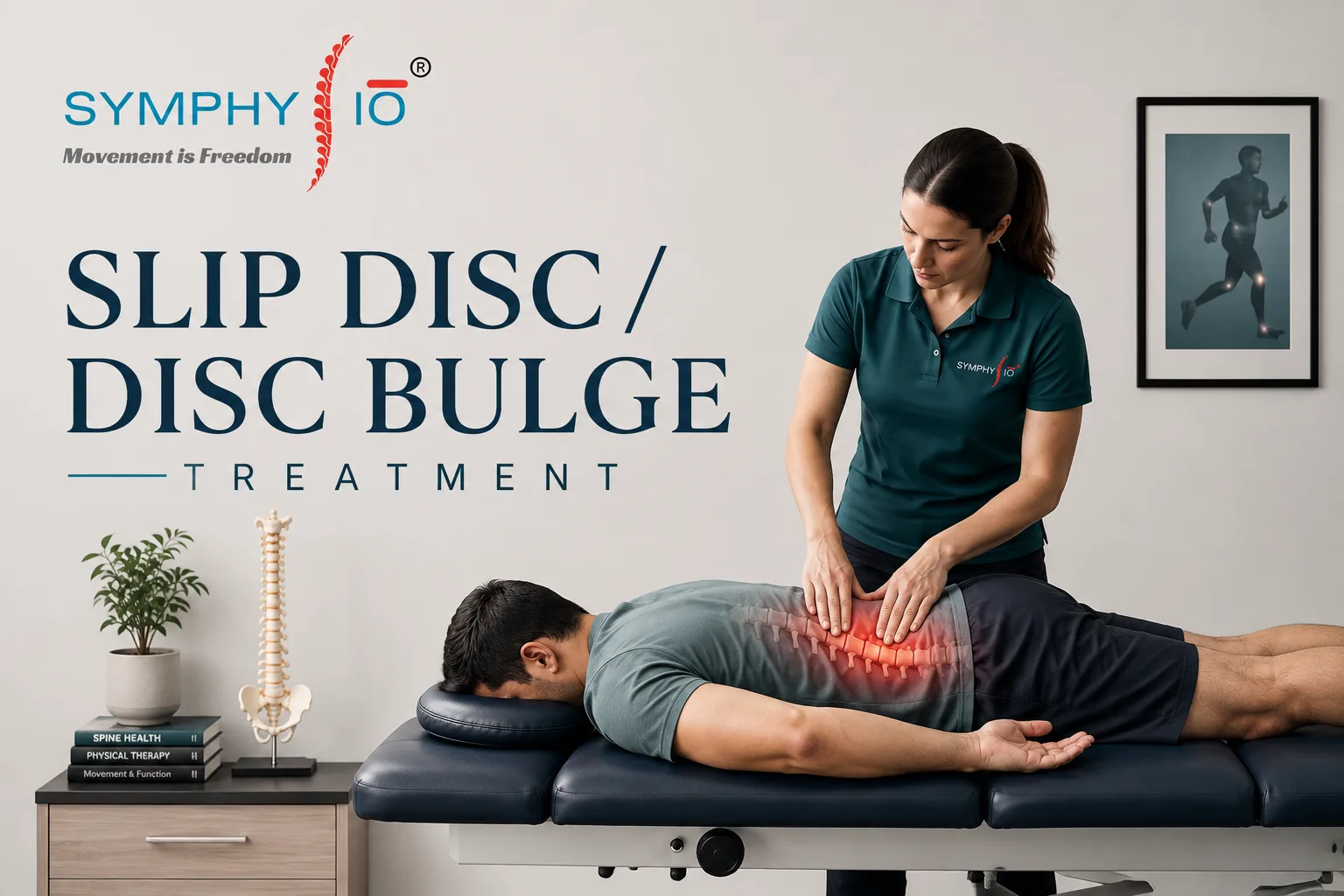
Slip Disc / Disc Bulge
What Is Slip Disc / Disc Bulge?
A slip disc, or disc bulge, occurs when the soft inner core of an intervertebral disc pushes against a weakened outer wall, causing the disc to bulge outward. This can irritate nearby nerves or the spinal cord, resulting in localized back pain and, in some cases, pain that radiates into the arms or legs. Despite the common name, the disc doesn't actually "slip" out of place — it's a structural change within the disc itself, and the severity can range from a mild bulge to a more significant herniation.
Most disc bulges respond well to non-surgical physiotherapy, particularly when treatment starts early and is guided by an accurate assessment of exactly where and how the disc is affecting surrounding structures.
Symptoms & Causes
Common symptoms include:
- Localized back pain that may radiate to the buttock, leg, or arm depending on the disc level affected
- Numbness or tingling in the affected limb
- Muscle weakness in more severe cases
- Pain that worsens with sitting, coughing, sneezing, or bending forward
- Reduced spinal flexibility and stiffness, especially in the morning
- Pain that may ease with lying down or specific positions
Common underlying causes:
- Age-related disc degeneration, reducing the disc's natural cushioning ability
- Repetitive strain from poor lifting mechanics or repeated bending/twisting
- Sudden heavy loading of the spine (lifting something too heavy, awkward movement)
- Prolonged poor posture, particularly extended sitting with poor spinal support
- Previous back injury that altered spinal mechanics over time
How We Assess It
Our assessment is designed to confirm the disc as the true source of symptoms and understand exactly how it's affecting you:
- Symptom mapping — understanding the exact pain pattern and how it behaves with different positions and movements
- Neurological testing — reflexes, sensation, and muscle strength testing in the affected limb to check for nerve involvement
- Movement-based provocation testing — specific positions and movements used to confirm the disc as the pain source and identify which direction of movement helps versus aggravates symptoms
- MRI review — where imaging is available, we review it to confirm the disc level and severity, though clinical assessment often provides enough information to begin treatment without imaging
This structured approach determines your specific "directional preference" — the movement pattern that actually reduces your symptoms — which becomes the foundation of your treatment plan.
Our Treatment Approach
Non-surgical management is the first-line approach for the vast majority of disc bulges, and treatment typically includes:
- Directional exercises — such as McKenzie-based protocols, using the specific movement pattern identified during assessment to reduce nerve compression and centralize pain
- Core stabilization exercises — building the deep trunk muscles that support and offload the affected disc
- Manual therapy — addressing surrounding joint stiffness and muscle tension that develops as the body compensates for the disc issue
- Posture and movement re-education — teaching you how to sit, lift, and move in ways that don't provoke the disc during daily activities and work
- Progressive loading — gradually reintroducing normal movement and activity as symptoms improve, to rebuild full function and confidence
Most patients are given a structured home exercise program to reinforce progress between sessions.
Benefits of Treatment
- Reduces nerve compression symptoms without surgery in most cases
- Decreases pain radiating into the arm or leg
- Improves core support around the affected disc level
- Restores functional movement for work and daily life
- Lowers risk of recurrence through long-term movement re-education
- Avoids or delays the need for injections or surgical intervention for many patients
Who Should Consider This / Contraindications
Most disc bulges respond well to conservative physiotherapy, especially when treatment begins early. However, immediate medical referral — not physiotherapy — is required for red-flag signs such as:
- Progressive weakness in the leg or foot
- Saddle anesthesia (numbness in the groin or inner thigh area)
- New loss of bladder or bowel control
These may indicate cauda equina syndrome, a rare but serious medical emergency requiring urgent care. Our therapists screen for these signs at your first visit and will refer you immediately if present.
Frequently Asked Questions
Yes, most disc bulges respond well to conservative physiotherapy, including directional exercises and core stabilization. Surgery is typically reserved for cases with progressive neurological deficits or those that don't respond to several months of conservative care.
This varies with severity, but many patients notice meaningful improvement within 4-6 weeks of consistent treatment, with continued progress over a few months for full recovery of strength and confidence in movement.
Not always. Many cases can be assessed and treated clinically based on symptom pattern and movement testing. Imaging is recommended when symptoms are severe, progressively worsening, or red-flag signs are present.
This depends on your specific directional preference identified during assessment — some patients need to avoid prolonged forward bending, others need to limit extension. Your therapist will give you personalized guidance rather than generic advice.
Generally no — prolonged bed rest can slow recovery and lead to deconditioning. Modern physiotherapy favors guided, directional movement over rest, once serious causes have been ruled out.
Disc bulges can improve significantly and many patients return to full function and activity. While the disc's structure may not return to its exact original state, most people achieve complete symptom resolution and full return to normal activities with appropriate treatment.
Often yes, with modifications. Your therapist will guide you on which movements to avoid temporarily and how to progressively return to full exercise as your symptoms improve.
A disc bulge is a broader, more generalized outward extension of the disc, while a herniation typically involves a more focal tear allowing disc material to escape further. Both are managed similarly with physiotherapy in most cases, though severity and treatment emphasis can differ.
Prolonged poor posture increases mechanical load on the spine over time and is a significant contributing factor, though it's rarely the sole cause — repetitive strain and sudden loading also play a role.
This depends on severity and how long symptoms have been present, but many patients begin noticing improvement within 3-5 sessions, with a full program typically spanning several weeks to a few months.
Related Treatments
Back Pain
Expert back pain physiotherapy in Sarita Vihar, Delhi NCR — root-cause assessment, hands-on manual therapy & exercise rehab for lasting relief.
Learn More
Sciatica
Physiotherapy for sciatica in Sarita Vihar, Delhi NCR — root-cause nerve assessment, hands-on therapy & targeted rehab for lasting relief.
Learn More
Visceral Manipulation
SignatureVisceral Manipulation therapy in Sarita Vihar, Delhi NCR — gentle, root-cause treatment for chronic pain linked to organ and fascial mobility.
Learn MoreSlip Disc / Disc Bulge in Sarita Vihar & South Delhi
Symphysio provides slip disc / disc bulge to patients across South Delhi. Our clinic in Sarita Vihar is easily accessible from:
Not sure if we cover your area? Contact us.
Don't Let a Slip Disc Limit Your Life
Book a root-cause assessment with Symphysio in Sarita Vihar today.