
Women's Health Physiotherapy
Specialized, private physiotherapy care for pelvic health, pregnancy, and postnatal recovery, in Sarita Vihar, Delhi NCR.
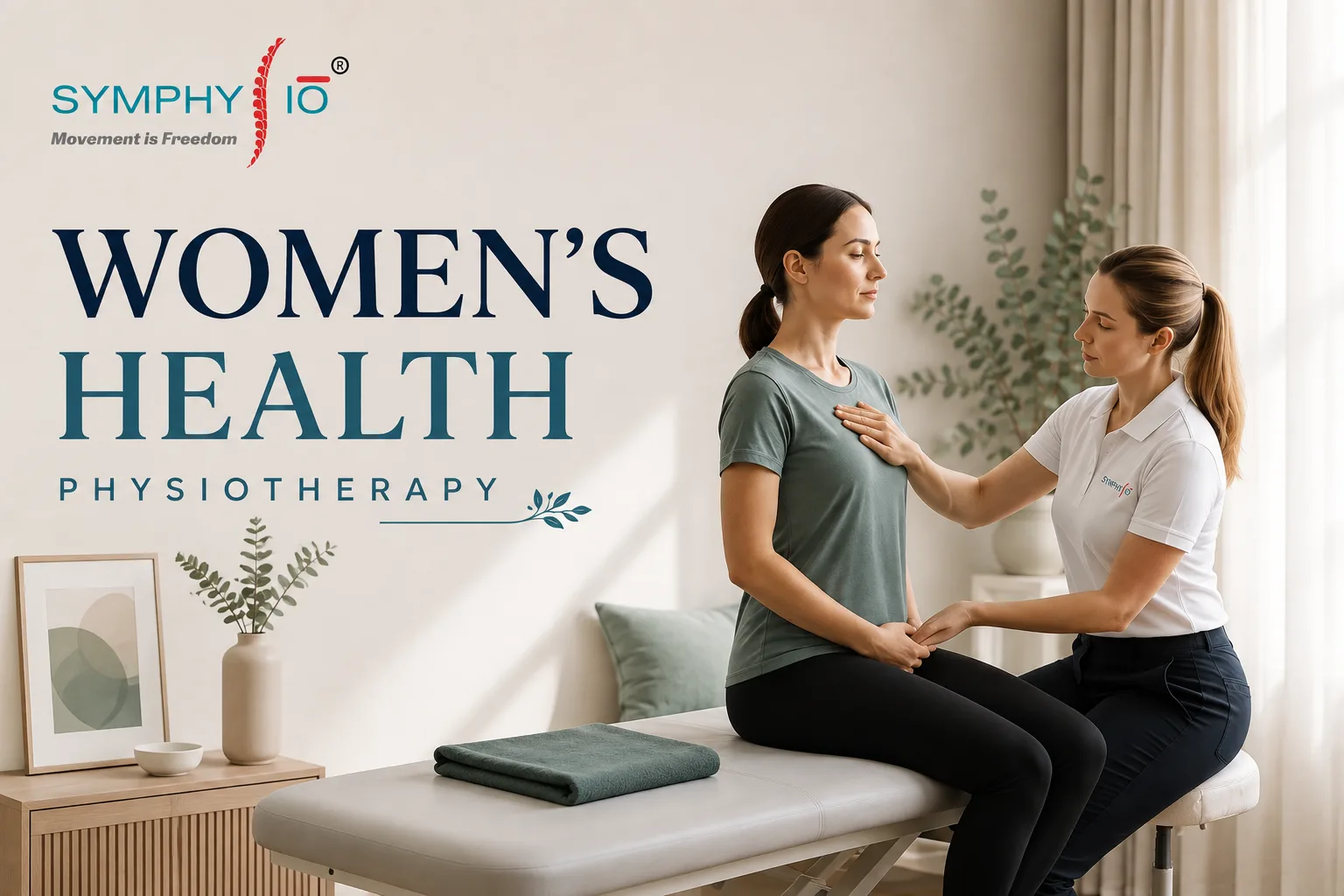
Women's Health Physiotherapy
What Is Women's Health Physiotherapy?
Women's health physiotherapy is a specialized area of physiotherapy addressing conditions related to the pelvic floor, pregnancy, postnatal recovery, and other health concerns specific to women across different life stages. This includes pelvic floor dysfunction, pregnancy-related musculoskeletal pain, postnatal recovery (including diastasis recti and pelvic floor rehabilitation), and pelvic pain conditions.
At Symphysio, women's health physiotherapy is delivered in a private, comfortable, and supportive environment, recognizing that these concerns are often sensitive and deserve a treatment approach built around trust, clear communication, and genuine understanding of what you're experiencing.
Symptoms & Causes
Common presentations we treat include:
- Pelvic floor dysfunction — including urinary incontinence, urgency, or pelvic organ prolapse symptoms
- Pregnancy-related pain — particularly pelvic girdle pain, low back pain, and rib or hip discomfort
- Postnatal recovery concerns — including diastasis recti (abdominal separation), pelvic floor weakness, and general postpartum musculoskeletal pain
- Pelvic pain — including pain during intercourse, chronic pelvic pain, or pain linked to pelvic floor tension
- Core and pelvic floor coordination difficulties affecting exercise, daily activity, or return to sport
Common contributing factors:
- Pregnancy and childbirth, which place significant demands on the pelvic floor and abdominal wall
- Hormonal changes affecting connective tissue and joint stability, particularly during pregnancy
- Chronic straining or heavy lifting affecting pelvic floor function over time
- Previous pelvic or abdominal surgery
- General deconditioning of the pelvic floor and core musculature over time
How We Assess It
Assessment is conducted with sensitivity and always with your full understanding and consent at every step:
- Detailed history — a thorough, private conversation about your symptoms, obstetric history where relevant, and how your concerns are affecting daily life
- Postural and movement assessment — evaluating how pregnancy, postnatal changes, or pelvic floor dysfunction may be affecting your broader movement patterns
- Pelvic floor assessment — conducted only with your informed consent, using appropriate and comfortable assessment methods to understand pelvic floor strength, coordination, and function
- Abdominal wall assessment — checking for diastasis recti and its severity where relevant to your postnatal recovery
Every assessment step is explained clearly beforehand, and you're always in control of what you're comfortable with during your visit.
Our Treatment Approach
Treatment is tailored to your specific stage and concerns, and may include:
- Pelvic floor rehabilitation — targeted exercises to address weakness, incoordination, or overactivity of the pelvic floor muscles, depending on your specific presentation
- Core and abdominal wall recovery — progressive exercises to address diastasis recti and rebuild functional core strength, particularly important in the postnatal period
- Manual therapy — for pregnancy-related or postnatal musculoskeletal pain (back, pelvis, hips)
- Education and guidance — practical strategies for daily activities, lifting, exercise, and return to sport that respect your pelvic floor and core recovery
- Breathing and pressure management techniques — since breathing patterns significantly influence pelvic floor and core function
Where relevant, Visceral Manipulation may also be incorporated to address pelvic organ mobility and fascial restrictions connected to pelvic floor function.
Benefits of Treatment
- Reduces pelvic floor dysfunction symptoms, including incontinence and urgency
- Supports safer, more comfortable pregnancy through targeted pain management
- Guides safe, progressive postnatal recovery of core and pelvic floor function
- Addresses diastasis recti with an appropriate, evidence-based exercise progression
- Improves confidence returning to exercise, sport, or daily activities after childbirth
- Provides a private, supportive space to address concerns that are often difficult to discuss elsewhere
Who Should Consider This / Contraindications
Women's health physiotherapy is beneficial at any life stage — before, during, and after pregnancy, and for pelvic health concerns unrelated to childbirth entirely. It's approached with particular care and modified technique in cases of:
- Active pregnancy complications requiring specific obstetric guidance first
- Recent pelvic or abdominal surgery, where treatment begins only once appropriately healed
- Certain pelvic pain presentations that may need coordinated care with a gynecologist or other specialist
Our therapists work collaboratively with your broader healthcare team where needed, and always prioritize your comfort and consent throughout every session.
Frequently Asked Questions
Not necessarily — assessment can often begin with external observation, movement testing, and detailed history, with further assessment only proceeding with your full understanding and consent. You're always in control of what you're comfortable with.
This varies by individual and delivery type, but many women benefit from an initial assessment in the weeks following delivery, with your therapist guiding appropriate timing based on your specific recovery and any medical clearance needed.
Yes, some degree of abdominal separation is a normal part of pregnancy, and it often improves with appropriate postnatal rehabilitation. Physiotherapy assessment can determine the extent and guide a suitable recovery program.
Yes, this is a common presentation addressed in women's health physiotherapy, often related to pelvic floor tension or coordination issues. Treatment is approached sensitively, with clear communication throughout.
No, pelvic floor dysfunction, chronic pelvic pain, and related concerns can affect women at any stage of life, not only during or after pregnancy.
No, urinary incontinence is common but not something you need to simply accept — pelvic floor physiotherapy is often very effective at improving or resolving these symptoms.
Yes, appropriate exercise during pregnancy is generally beneficial and can be specifically guided to support your changing body and reduce common pregnancy-related discomfort, within any restrictions your obstetric care team has advised.
This depends on your individual recovery, particularly pelvic floor and core function, rather than a fixed timeframe — your therapist will guide a progressive return based on assessment findings rather than time alone.
Yes, women's health physiotherapy sessions are conducted in a private, comfortable setting with sensitivity to the personal nature of these concerns.
Yes, it's sometimes incorporated to address pelvic organ mobility and fascial restrictions that can contribute to pelvic floor dysfunction, particularly following pregnancy, childbirth, or pelvic surgery.
Related Treatments
Visceral Manipulation
SignatureVisceral Manipulation therapy in Sarita Vihar, Delhi NCR — gentle, root-cause treatment for chronic pain linked to organ and fascial mobility.
Learn More
Back Pain
Expert back pain physiotherapy in Sarita Vihar, Delhi NCR — root-cause assessment, hands-on manual therapy & exercise rehab for lasting relief.
Learn More
Post Surgical Rehab
Post-surgery physiotherapy in Sarita Vihar, Delhi NCR — structured, progressive rehab protocols for full functional recovery.
Learn MoreWomen's Health Physiotherapy in Sarita Vihar & South Delhi
Symphysio provides women's health physiotherapy to patients across South Delhi. Our clinic in Sarita Vihar is easily accessible from:
Not sure if we cover your area? Contact us.
Compassionate, Private Care for Every Stage
Book a women's health physiotherapy assessment with Symphysio in Sarita Vihar today.