
Plantar Fasciitis Treatment
Root-cause physiotherapy to relieve heel pain and restore comfortable, confident walking, in Sarita Vihar, Delhi NCR.
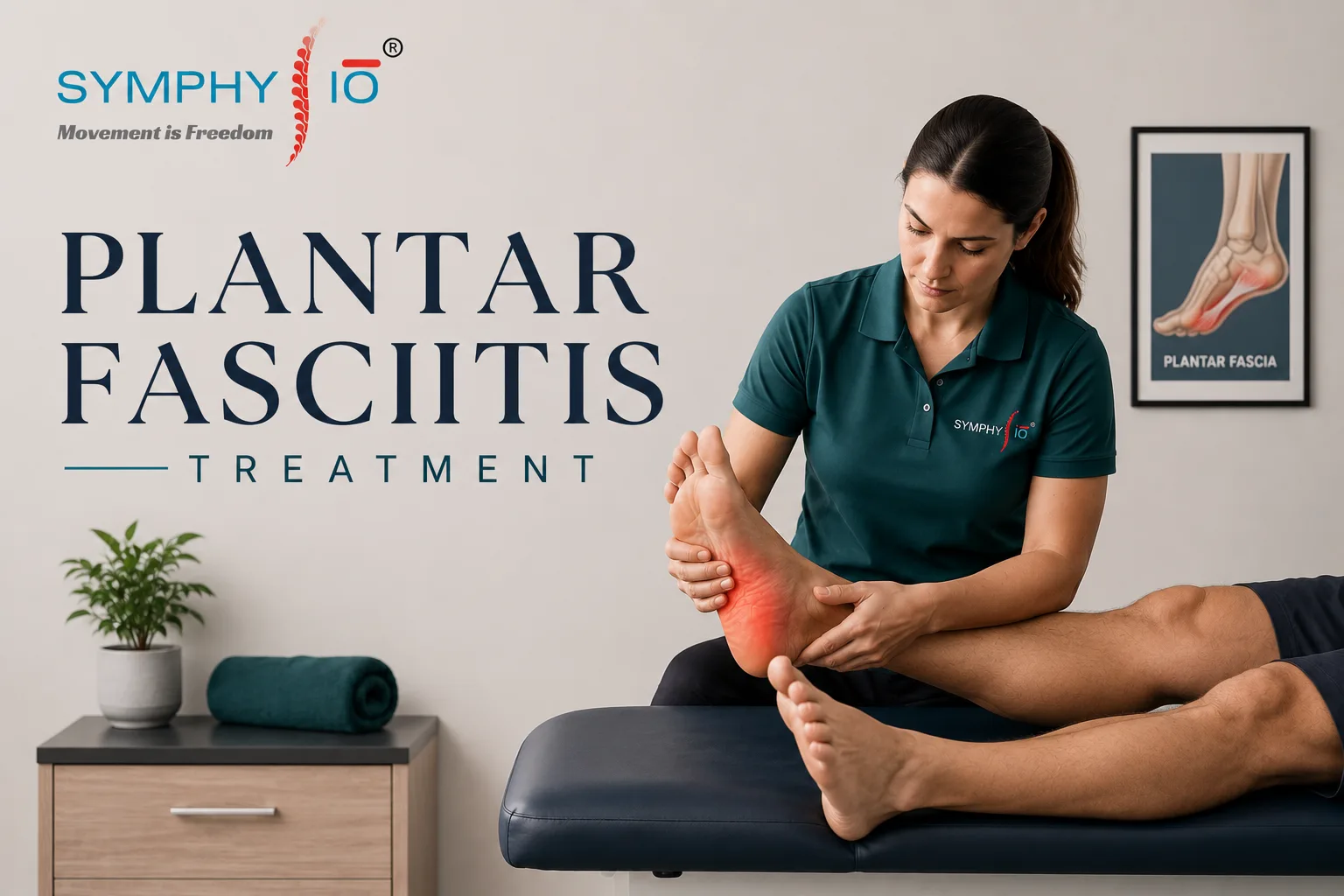
Plantar Fasciitis
What Is Plantar Fasciitis?
Plantar fasciitis is a condition involving pain and irritation of the plantar fascia — the thick band of connective tissue that runs along the bottom of the foot, connecting the heel to the toes. It's one of the most common causes of heel pain, and like tennis elbow, is increasingly understood as a tissue overload condition rather than pure inflammation, which shapes how modern physiotherapy approaches treatment.
The plantar fascia plays an important role in supporting the arch of the foot and absorbing impact during walking and running. When it becomes overloaded — through excess activity, biomechanical factors, or footwear issues — small areas of irritation and structural change develop, causing the characteristic heel pain associated with this condition.
Symptoms & Causes
Common symptoms include:
- Sharp heel pain, often most severe with the first steps in the morning
- Pain that eases somewhat with continued walking but can return after periods of rest
- Pain that worsens after prolonged standing or at the end of a long day
- Tenderness when pressing on the bottom of the heel
- Pain that may develop gradually over weeks or come on more suddenly
Common underlying causes:
- Biomechanical factors — flat feet, high arches, or altered walking/running mechanics
- Tight calf muscles or Achilles tendon, increasing strain on the plantar fascia
- Sudden increase in walking, running, or standing activity
- Inappropriate or worn footwear, particularly lacking adequate arch support
- Excess body weight, increasing load through the plantar fascia
- Prolonged standing, particularly on hard surfaces, for work or other reasons
How We Assess It
Assessment focuses on identifying the biomechanical and contributing factors specific to your case:
- Palpation and provocation testing — identifying the specific tender area at the heel and reproducing symptoms with specific tests
- Gait and movement assessment — analyzing your walking pattern and foot mechanics to identify biomechanical contributors
- Calf and ankle mobility testing — since tightness here is a common contributing factor to plantar fascia overload
- Footwear review — assessing your typical footwear for adequate support and identifying any changes that might help
- Activity and load history — understanding recent changes in walking, running, or standing demands that may have triggered symptoms
This comprehensive approach ensures treatment addresses your specific contributing factors, not just the painful area itself.
Our Treatment Approach
Treatment typically includes:
- Progressive loading exercises — a structured strengthening program for the plantar fascia and surrounding foot and calf muscles, following modern tendinopathy-informed principles rather than rest alone
- Manual therapy — soft tissue release for the plantar fascia and calf, and joint mobilization where restricted foot or ankle mobility is contributing
- Calf and ankle stretching — addressing tightness that increases strain on the plantar fascia
- Footwear and orthotic guidance — practical recommendations to reduce ongoing strain during daily activity
- Activity modification — temporary adjustments to walking, running, or standing demands while symptoms settle, without complete inactivity
- Taping techniques — where appropriate, to provide additional support during the early stages of treatment
Complete rest is generally not the primary approach, since appropriate loading supports genuine tissue recovery and adaptation over time.
Benefits of Treatment
- Reduces heel pain, particularly the characteristic first-step morning pain
- Addresses underlying biomechanical contributors, not just the symptomatic area
- Improves calf and ankle flexibility contributing to reduced fascia strain
- Supports return to walking, running, or standing-based work without recurrence
- Provides practical footwear guidance to prevent future flare-ups
- Avoids the prolonged, incomplete recovery that can result from rest alone
Who Should Consider This / Contraindications
Physiotherapy is highly effective for most cases of plantar fasciitis, particularly with an approach that addresses biomechanical factors alongside local treatment. It's approached with medical evaluation first in cases of:
- Suspected stress fracture of the heel bone (calcaneus)
- Sudden, severe heel pain following a specific traumatic incident
- Signs of nerve involvement (numbness, tingling, or pain with a different quality than typical plantar fasciitis)
- Symptoms not responding to a reasonable course of appropriate treatment, where further investigation may be warranted
Our therapists will confirm plantar fasciitis as the correct diagnosis before beginning treatment, since other conditions can present with similar heel pain.
Frequently Asked Questions
This is a hallmark symptom of plantar fasciitis — the fascia tightens overnight while at rest, and the first steps after waking stretch it suddenly, causing characteristic sharp pain that typically eases somewhat as you continue walking.
Not necessarily — modern treatment favors controlled, progressive loading over complete rest, since some activity is important for genuine tissue recovery. Your therapist will guide you on the right balance of activity and modification.
This varies, but plantar fasciitis often takes several weeks to a few months to fully resolve with consistent treatment, given the nature of connective tissue healing — earlier treatment generally leads to faster resolution.
Not always — this depends on your specific biomechanical assessment findings. Some patients benefit significantly from orthotic support, while others respond well to exercise and footwear changes alone.
This depends on severity and your specific presentation — your therapist will advise on whether modified running (reduced distance, different surfaces) is appropriate or whether temporary activity substitution is needed while symptoms settle.
Excess body weight can increase load through the plantar fascia and is a relevant contributing factor for some patients, though it's rarely the sole cause — biomechanics, footwear, and activity levels also play significant roles.
Stretching (particularly of the calf) is a helpful component, but progressive strengthening exercises are typically more important for genuine, lasting recovery than stretching alone.
It can, particularly if underlying contributing factors like footwear, calf tightness, or sudden activity changes aren't addressed. This is why treatment includes these broader factors, not just resolving the current episode.
Generally, flat, unsupportive footwear or shoes with minimal cushioning can aggravate symptoms. Your therapist can give you specific footwear guidance based on your foot type and assessment findings.
Not exactly — a heel spur is a bony growth that can sometimes be seen on imaging in people with plantar fasciitis, but many people with heel spurs have no pain at all, and many people with plantar fasciitis have no heel spur. Treatment focuses on the plantar fascia condition itself rather than the incidental spur finding.
Related Treatments
Knee Pain
Expert knee pain physiotherapy in Sarita Vihar, Delhi NCR — root-cause biomechanical assessment, hands-on therapy & strength rehab.
Learn More
Sports Injury Rehab
Sports injury physiotherapy in Sarita Vihar, Delhi NCR — root-cause assessment, hands-on rehab & return-to-sport programs for athletes.
Learn More
Posture & Ergonomics
Posture correction & ergonomic assessment in Sarita Vihar, Delhi NCR — practical, personalized guidance to prevent desk-related pain.
Learn MorePlantar Fasciitis in Sarita Vihar & South Delhi
Symphysio provides plantar fasciitis to patients across South Delhi. Our clinic in Sarita Vihar is easily accessible from:
Not sure if we cover your area? Contact us.
Walk Pain-Free Again
Book a plantar fasciitis assessment with Symphysio in Sarita Vihar today.