
Neurological Rehabilitation
Structured, progressive physiotherapy to rebuild movement, strength, and independence after neurological injury or diagnosis, in Sarita Vihar, Delhi NCR.
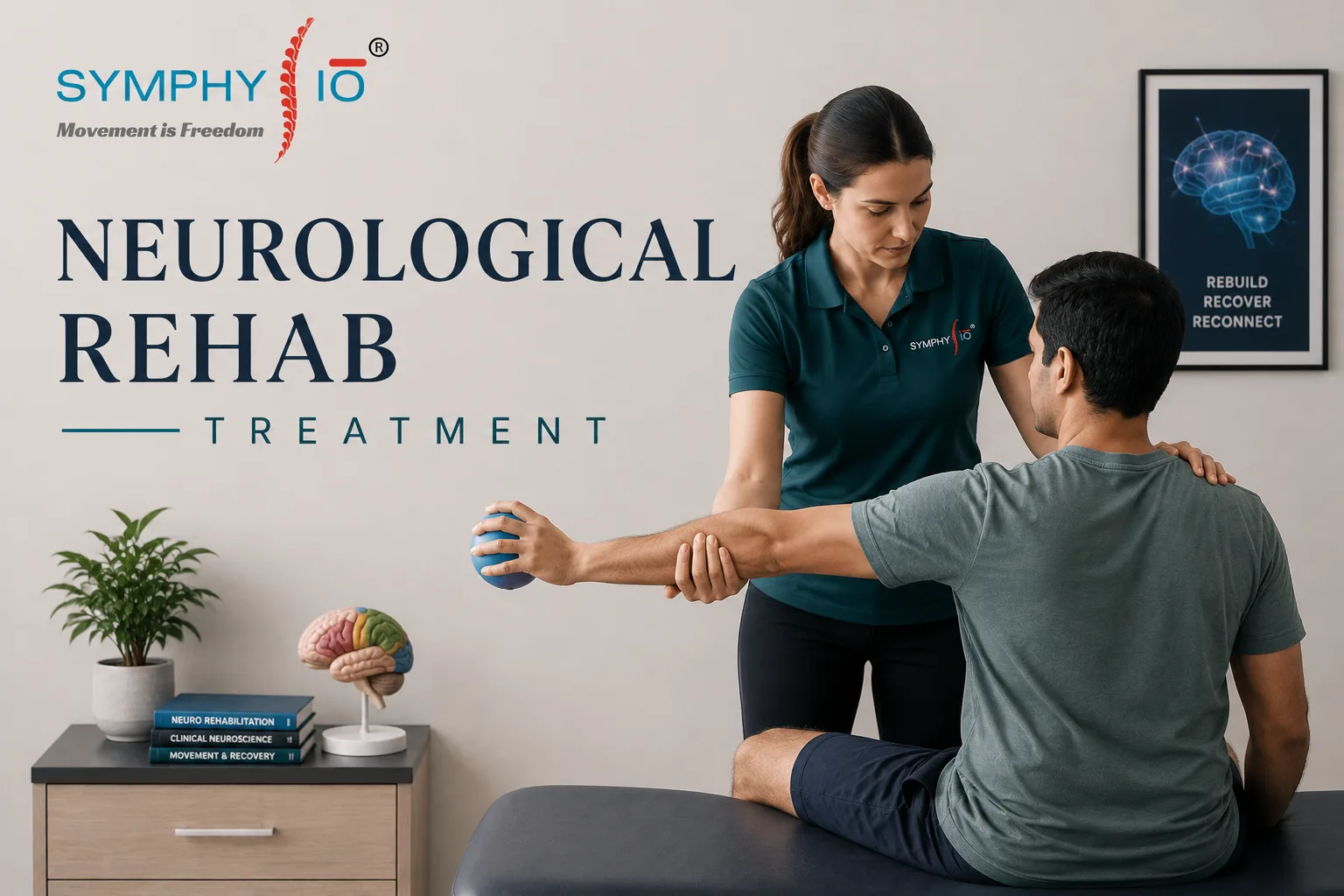
Neurological Rehab
What Is Neurological Rehab?
Neurological rehabilitation is a specialized area of physiotherapy focused on restoring movement, function, and independence in people affected by conditions involving the brain, spinal cord, or nervous system. This includes recovery following stroke, traumatic brain injury, spinal cord injury, and management of progressive neurological conditions such as Parkinson's disease and multiple sclerosis.
Unlike musculoskeletal rehabilitation, neurological rehabilitation works with the nervous system's capacity for neuroplasticity — its ability to reorganize and adapt — using repetitive, task-specific practice to help rebuild movement patterns and function over time. At Symphysio, this approach is tailored closely to each person's specific condition, current abilities, and personal goals.
Symptoms & Causes
Common symptoms addressed include:
- Muscle weakness
- Balance and coordination difficulties
- Altered movement patterns
- Reduced walking ability
- Challenges with daily functional tasks
Neurological rehabilitation commonly supports recovery and management for:
- Stroke recovery — addressing weakness, coordination difficulties, balance problems, and movement pattern changes
- Traumatic brain injury — rebuilding physical function, balance, and coordination following injury
- Spinal cord injury — maximizing function and independence based on the level and severity of injury
- Parkinson's disease — managing movement symptoms, balance, and mobility through targeted exercise approaches
- Multiple sclerosis — supporting strength, balance, and fatigue management through appropriately paced physiotherapy
- Peripheral nerve injuries — addressing weakness, sensory changes, and functional limitations from nerve damage
How We Assess It
Neurological assessment is comprehensive and individualized:
- Detailed history — understanding your diagnosis, medical background, and how your condition is affecting daily life and function
- Movement and functional assessment — evaluating strength, coordination, balance, and how you perform key functional tasks (standing, walking, transfers)
- Goal setting — working closely with you to understand what matters most to your recovery and daily independence, since neurological rehabilitation goals are highly personal
- Coordination with your broader medical team — reviewing relevant medical history and coordinating with neurologists or other specialists involved in your care where appropriate
This assessment forms the foundation of a rehabilitation plan built specifically around your condition, current abilities, and personal priorities.
Our Treatment Approach
Neurological rehabilitation uses evidence-informed, condition-specific approaches:
- Task-specific practice — repetitive practice of meaningful functional movements (standing, walking, reaching) to support neuroplastic recovery
- Balance and coordination training — progressive exercises to rebuild stability and reduce fall risk
- Strength training — addressing weakness in affected muscle groups through appropriately dosed exercise
- Gait retraining — specific work on walking pattern, where relevant, to improve safety, efficiency, and independence
- Functional mobility training — practicing transfers, stairs, and other daily movement tasks relevant to your independence
- Condition-specific pacing — particularly important for conditions like multiple sclerosis, where fatigue management is a key part of appropriate exercise dosing
Treatment is progressive and regularly reassessed, adapting as your function and goals evolve throughout the rehabilitation process.
Benefits of Treatment
- Supports recovery of movement and function following stroke or brain injury
- Improves balance and reduces fall risk
- Builds strength in affected muscle groups
- Supports greater independence in daily activities
- Provides condition-specific management for progressive neurological conditions
- Offers structured, professional guidance through what can be a challenging and uncertain recovery journey
Who Should Consider This / Contraindications
Neurological rehabilitation is appropriate for anyone recovering from or managing a neurological condition affecting movement and function, at any stage of recovery — from early post-stroke rehabilitation to longer-term management of progressive conditions. Treatment is always closely coordinated with your neurologist or treating medical team, and certain considerations apply:
- Medical stability and appropriate clearance from your treating physician, particularly in the early stages following acute neurological events like stroke
- Specific precautions relevant to your condition (such as blood pressure management post-stroke, or seizure precautions where relevant) are always factored into treatment planning
- Any new or worsening neurological symptoms during treatment require prompt communication with your medical team
Our therapists work as part of your broader care team to ensure rehabilitation is safe, appropriate, and aligned with your medical management.
Frequently Asked Questions
This depends on medical stability and your treating team's guidance, but early, appropriately guided rehabilitation is generally associated with better outcomes. We coordinate closely with your medical team on timing.
Yes, while these conditions aren't cured by physiotherapy, rehabilitation plays a significant role in managing symptoms, maintaining function, and supporting quality of life throughout the course of the condition.
This varies enormously depending on the condition, severity, and individual recovery pattern — from a defined program following a specific injury to ongoing, longer-term management for progressive conditions. Your therapist will discuss realistic expectations based on your specific situation.
Not necessarily continuous treatment — many patients complete an intensive rehabilitation phase and then transition to periodic reviews or a self-managed program, though this depends significantly on your specific condition and its course.
Yes, balance and coordination training is a core component of neurological rehabilitation and can meaningfully reduce fall risk and improve confidence in daily movement.
No, while gait and walking are often a focus, neurological rehabilitation addresses the full range of functional movement — including balance, transfers, upper limb function, and daily activity performance, based on your specific goals.
Yes, appropriately dosed exercise is generally beneficial and is an important part of management for conditions like multiple sclerosis, with careful attention to fatigue management and individual tolerance.
Goals are highly personal and set collaboratively with you, based on what matters most to your daily life and independence — this could range from walking longer distances to managing specific daily tasks more independently.
Yes, family involvement can be valuable, particularly for understanding how to support daily function and practice between sessions, and we're happy to discuss how family members can be included where appropriate.
Any new or worsening symptoms should be communicated promptly — we work closely with your treating medical team and will adjust or pause physiotherapy as needed, ensuring your safety remains the priority.
Related Treatments
Post Surgical Rehab
Post-surgery physiotherapy in Sarita Vihar, Delhi NCR — structured, progressive rehab protocols for full functional recovery.
Learn More
Posture & Ergonomics
Posture correction & ergonomic assessment in Sarita Vihar, Delhi NCR — practical, personalized guidance to prevent desk-related pain.
Learn More
Visceral Manipulation
SignatureVisceral Manipulation therapy in Sarita Vihar, Delhi NCR — gentle, root-cause treatment for chronic pain linked to organ and fascial mobility.
Learn MoreNeurological Rehab in Sarita Vihar & South Delhi
Symphysio provides neurological rehab to patients across South Delhi. Our clinic in Sarita Vihar is easily accessible from:
Not sure if we cover your area? Contact us.
Rebuild Strength, Movement, and Independence
Book a neurological rehabilitation assessment with Symphysio in Sarita Vihar today.