Craniosacral Therapy for Headaches and Migraines: What to Know
Explore craniosacral therapy for headaches and migraine: what a session feels like, possible benefits, safety, and what research says before you book.

Written by Dr. Rahul Bhandari, PT, MPT (Sports)
Published October 13, 202610 min read
In this article
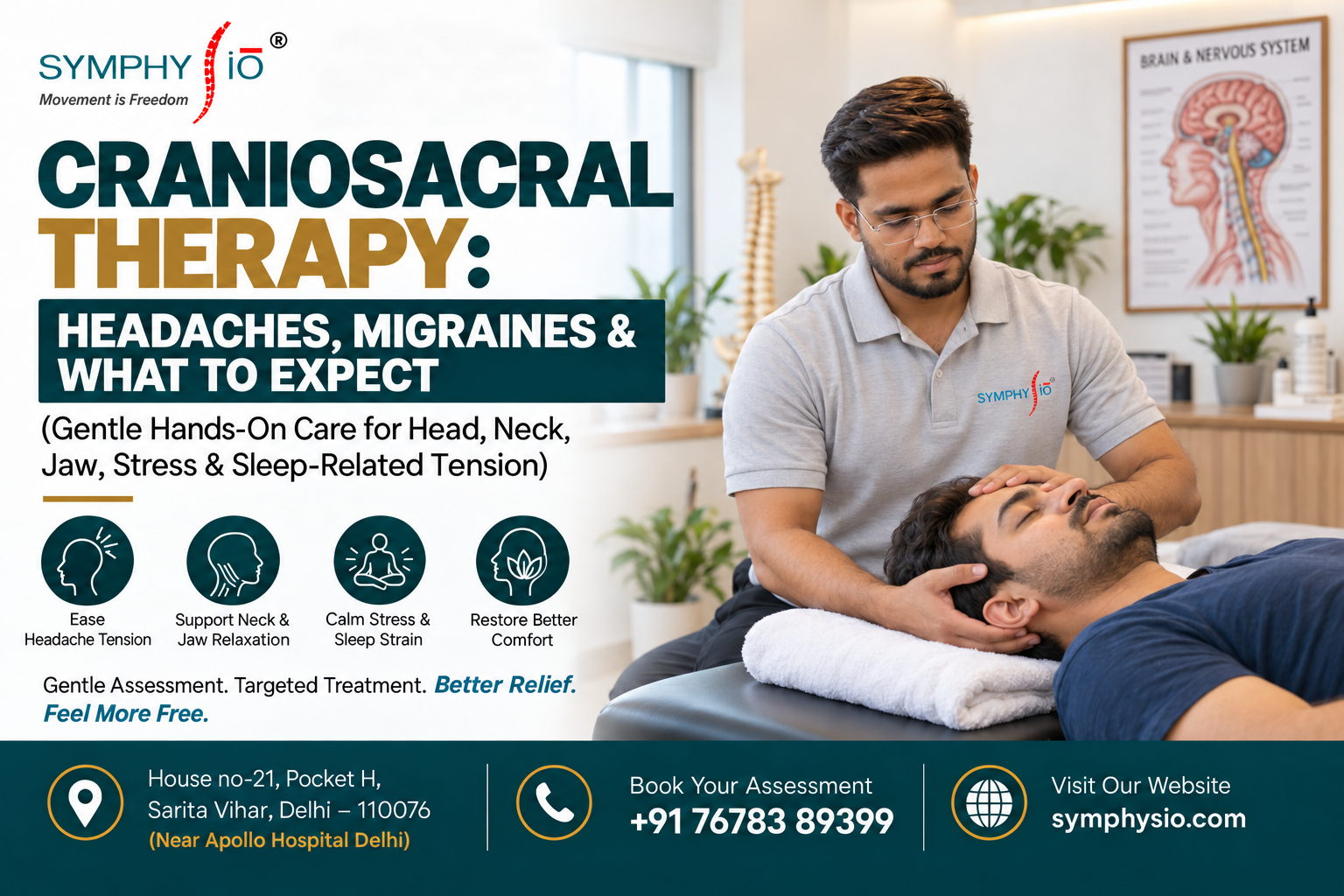
Craniosacral therapy is a gentle, hands-on approach in which a practitioner uses very light touch around the head, neck, spine and other areas. It is sometimes offered to people with headaches or muscle tension, but strong evidence that it treats migraine or other conditions is lacking. At Symphysio Physiotherapy Clinic, you can learn about craniosacral therapy treatment and discuss whether it belongs in your wider care plan.
What Is Craniosacral Therapy and How Is It Thought to Work?
Craniosacral therapy, often shortened to CST therapy, was developed by osteopathic physician Dr. John Upledger. The name refers to the cranium (skull) and sacrum (a bone at the base of the spine). You may also see the spelling cranial sacral therapy online; people generally mean the same approach.
In a session, the practitioner rests their hands lightly on selected areas, often the head, neck, back or pelvis. Unlike a deep massage, the pressure is usually very gentle.
Practitioners describe trying to sense subtle movement or tension around the tissues surrounding the brain and spinal cord. Imagine gently smoothing a crease in a bedsheet rather than pulling hard on it. That gives you an idea of the style of touch, not proof of the proposed medical mechanism.
Why Are Headaches Sometimes Linked to the Neck, Jaw, Posture and Stress?
Headaches have different causes. Understanding the pattern matters more than choosing a therapy from a list of symptoms.
Is it a tension headache or a migraine?
A tension-type headache often feels like pressure or a tight band across the forehead or around the head. Neck and shoulder tenderness may come with it. Stress, poor sleep and long periods in one position can make symptoms harder to manage.
A migraine may cause moderate or severe throbbing pain, nausea, and sensitivity to light or sound. It can happen on one or both sides. Some people see flashing lights or other changes before an attack. Migraine is not caused simply by poor posture, and it deserves proper diagnosis and treatment.
Can jaw clenching or screen strain contribute?
Clenching your teeth during a busy workday may leave your jaw muscles sore. The neck and jaw share nearby muscles and pain pathways, so symptoms can overlap. If clicking, painful chewing or morning jaw tightness sound familiar, read about jaw pain and TMJ physiotherapy.
As explained in why neck pain keeps coming back, looking down at a phone or holding one position all day may also tire the neck. That does not mean posture alone explains every headache. Our guide to tech neck and smartphone strain explains practical changes you can try.
Can Craniosacral Therapy for Headaches or Migraine Help?
Some people find the calm setting and gentle touch comfortable. Craniosacral therapy for headaches is sometimes offered as an optional supportive approach, especially when muscle tension or stress is also present. But comfort during a session does not mean fewer headaches will follow.
What about craniosacral therapy for migraine?
A few small clinical trials reported improvement in certain migraine outcomes. Headache and neck pain physiotherapy may also be considered when neck symptoms are present. However, larger reviews of trials have not found convincing, clinically meaningful benefits overall. So craniosacral therapy for migraine should not replace prescribed medicine, medical assessment or a migraine management plan.
What are the possible craniosacral therapy benefits?
People may describe temporary relaxation, a sense of rest, or feeling more aware of their tension. These are possible personal experiences, not proven treatment outcomes. Current research does not establish that this method reliably reduces headache frequency, treats anxiety or improves sleep.
A sensible goal is to discuss your symptoms and preferences, then choose care with clear ways to review progress. Never feel that you must continue a therapy that is not helping.
Is Craniosacral Therapy Used for Neck Pain, TMJ, Stress or Sleep?
Craniosacral therapy for neck pain
Light touch is sometimes offered to people who dislike firm pressure. However, evidence that it improves neck pain better than a credible comparison treatment is weak. Neck movement, strengthening, activity changes and assessment of contributing factors are usually more useful parts of a physiotherapy plan.
Craniosacral therapy for TMJ or jaw pain
Jaw clenching can come with headaches and tight facial muscles. A session may feel soothing, but craniosacral therapy for TMJ or jaw pain is not an established treatment. Jaw exercises, habits, dental assessment where indicated and appropriate physiotherapy may be more relevant.
Craniosacral therapy for stress, anxiety or sleep
Lying quietly with light touch may be relaxing for some adults. Still, there is not good evidence that craniosacral therapy treats an anxiety disorder or a sleep disorder. If poor sleep or anxiety persists, speak with a qualified clinician rather than relying on manual therapy alone.
What Should You Expect in a Craniosacral Therapy Session?
Knowing what will happen often makes the first visit easier. A visit involving assessment and hands-on care may take about 45–60 minutes, although the actual duration should be confirmed when booking.
- Talk about your symptoms. Explain where the headache starts, how often it comes, whether you feel nausea or light sensitivity, and what medicines you use. Mention any recent injuries or health conditions.
- Have an assessment. A physiotherapist may ask about your neck movement, jaw symptoms, daily routine and warning signs. They should explain whether medical review is needed first.
- Stay fully clothed. Wear soft, comfortable clothing that lets you lie down and move easily. You can ask for a different position if lying flat is uncomfortable.
- Experience gentle hand contact. The practitioner may place their hands under your head or gently against your neck, back or other agreed areas. There should be no forceful cracking or painful pressure.
- Check how you feel. You might feel relaxed, unchanged or briefly tired. Tell the practitioner about pain, dizziness, nausea or anything that worries you.
How Is Craniosacral Therapy vs Massage Different?
| Feature | Craniosacral therapy | Massage |
|---|---|---|
| Touch | Very light, mostly still hand contact | Often stroking, kneading or pressure |
| Main focus | Claimed craniosacral tissue or rhythm restrictions | Muscles and other soft tissues |
| Clothing | Usually fully clothed | Depends on the massage style |
| Feeling | Quiet and subtle | Can range from gentle to firm |
| Evidence for headache relief | No reliable clinical benefit established | Depends on the type of massage and headache; evidence varies |
Neither approach should be used to explain away warning signs or replace appropriate medical care.
Does Craniosacral Therapy Work? What Does Research Say?
This is worth asking before paying for any treatment. The evidence is limited and mixed, with an important difference between early individual trials and later reviews that assess the whole picture.
A 2022 migraine trial reported improvements compared with a sham treatment, but it was small. A 2020 review of studies on chronic pain reported encouraging findings, while noting limits in the available evidence.
More recent reviews reached less positive conclusions. A 2024 systematic review in Healthcare found no clinically relevant benefit for headaches, neck pain or several other conditions studied. Another 2024 meta-analysis in Frontiers in Medicine found no reliable effect across its main outcomes. That means current evidence does not support presenting CST as a proven headache or migraine treatment.
Is Craniosacral Therapy Safe? What Are the Side Effects?
Because the contact is light, it may seem low risk. But is craniosacral therapy safe for everyone? No treatment can be assumed safe without checking the person's history. Research has not tracked side effects consistently enough to rule out rare harms.
Possible craniosacral therapy side effects reported or discussed in practice include temporary soreness, headache, tiredness or dizziness. These may also relate to the person's existing symptoms, and reliable rates are not known. Stop and seek advice if symptoms worsen.
Get medical clearance first if you are pregnant; have had recent head, neck or spinal surgery; have a recent concussion or other head injury; have a known aneurysm, bleeding in or around the brain, raised pressure inside the skull, a significant neurological condition, or an unexplained new headache. Children should have a medical assessment rather than being booked straight into complementary therapy.
The greatest practical risk is delaying assessment of a headache that needs urgent care.
When Does a Headache Need a Doctor Immediately?
Seek emergency medical care rather than a therapy appointment if you have:
- A sudden, explosive headache that reaches its worst intensity within moments, especially the “worst headache ever”
- A headache after a significant head injury
- New weakness, numbness, trouble speaking, confusion, fainting or seizures
- Sudden vision loss or a major new visual change
- Fever with a stiff neck, rash or severe illness
A new headache beginning after age 50 needs prompt medical assessment, especially if it is unusual or comes with scalp tenderness, jaw pain while chewing or vision changes. A headache that is getting worse, changing in character or repeatedly waking you from sleep also deserves medical review.
How Many Sessions of Craniosacral Therapy Are Usually Needed?
There is no research-backed number of sessions that works for headaches or migraine. Some practitioners suggest starting with 1–3 sessions and reviewing whether the experience is helpful, but this is a practical review point, not a proven treatment course.
Where Can You Discuss Craniosacral Therapy in Sarita Vihar?
Symphysio Physiotherapy Clinic offers a place to discuss your headaches, neck symptoms and treatment preferences. Dr. Rahul Bhandari, PT, MPT (Sports), Founder & Clinical Director, has undertaken CranioSacral Therapy training at the Upledger Institute. His other listed training includes Visceral Manipulation at the Barral Institute and Fascial Manipulation at the Stecco Institute; he is also a Certified Chiropractor (USA).
If you are searching for Upledger craniosacral therapy or local craniosacral care, ask how gentle hands-on care might fit alongside neck physiotherapy, exercises and posture-related advice. The clinic serves people from Jasola, Okhla, Kalindi Kunj, New Friends Colony, Sukhdev Vihar, Madanpur Khadar, Badarpur, Kalkaji, Govindpuri, CR Park and South Delhi.
The priority should be a suitable assessment and an honest conversation about what is and is not supported by evidence.
Ready to Talk About Your Headaches?
If headaches come with neck stiffness, jaw tightness or long screen hours, an individual assessment can help you understand your options. Read about craniosacral therapy at Symphysio or book an appointment to discuss what care suits you.
Symphysio Physiotherapy Clinic
House No. 21, Pocket H, Sarita Vihar, New Delhi 110076
Phone/WhatsApp: +91 76783 89399
Hours: Daily 9:00 AM – 9:00 PM
Related reading
- What is visceral manipulation? Benefits, uses and safety — another gentle, hands-on approach and how its evidence compares.
- Why does neck pain keep coming back?
References
- Carrasco-Uribarren A, et al. “Clinical Effectiveness of Craniosacral Therapy in Patients with Headache Disorders: A Systematic Review and Meta-analysis.” Pain Management Nursing. 2024. PubMed.
- Ceballos-Laita L, et al. “Is Craniosacral Therapy Effective? A Systematic Review and Meta-Analysis.” Healthcare. 2024;12(6):679. Full text.
- Amendolara A, et al. “Effectiveness of osteopathic craniosacral techniques: a meta-analysis.” Frontiers in Medicine. 2024. PubMed.
- Haller H, et al. “Craniosacral therapy for chronic pain: a systematic review and meta-analysis of randomized controlled trials.” BMC Musculoskeletal Disorders. 2020;21:1. PubMed.
- Upledger Institute International. “What Is CranioSacral Therapy?” Institute information. This explains the method as taught; it does not independently establish clinical effectiveness.
Medical disclaimer: This article is general information, not a diagnosis or substitute for medical advice. Headaches can have serious causes. Consult a qualified clinician about new, severe or persistent symptoms, and seek emergency care for warning signs listed above. Read our medical disclaimer.
Frequently Asked Questions
It usually involves very light touch and should not be painful. Speak up immediately if any contact or position makes you uncomfortable. You can ask to stop.
Safety and effectiveness for children are not well established. A child with headaches should first be assessed by an appropriate doctor. Do not use CST instead of recommended paediatric care.
Ask your obstetric clinician for clearance first, particularly if the headache is new or different. Severe headache, vision changes or swelling during pregnancy require urgent medical assessment.
No. Do not stop prescribed migraine medicine or prevention treatment without discussing it with your doctor. CST has not been shown reliably to prevent or treat migraine attacks.
Yes. “Cranial sacral therapy” is a common alternate spelling. Both names usually refer to gentle-touch CST, sometimes associated with the Upledger approach.
You can enquire at Symphysio Physiotherapy Clinic in Sarita Vihar about its service and whether an assessment is appropriate. The clinic also serves nearby neighbourhoods across South Delhi.
It is not an established standalone treatment. For tension-type headaches, a clinician can discuss non-drug steps such as exercise, stress management, sleep, movement breaks and suitable physiotherapy, alongside medicines when needed.
There is no reliable evidence that one session, or a longer course, fixes headaches. A useful plan starts with identifying the headache type and reviewing progress over time.
- craniosacral therapy
- headaches
- migraine
- neck pain
- TMJ
- stress
- physiotherapy
- manual therapy
Further reading
These sources provide background guidance and research. Evidence and suitability vary by condition and technique; discuss benefits, risks and alternatives with your clinician.
General health information cannot diagnose your symptoms or replace individual medical advice. Do not delay urgent care for concerning symptoms. Read our medical disclaimer.
Book an assessment at Symphysio
Talk to our team in Sarita Vihar and get a plan built around your symptoms, not a fixed protocol.