Tech Neck: Symptoms, Phone Habits & Exercises
Find out why phone use can coincide with neck discomfort, how to vary screen habits and movement, and when symptoms need a physiotherapy assessment.

Written by Dr. Rahul Bhandari, PT, MPT (Sports)
Published August 13, 2026Last updated October 14, 20266 min read
In this article
Tech neck is a common label for neck discomfort associated with prolonged screen use. It is not a diagnosis of permanent damage, and movement breaks, comfortable device positioning and a tailored activity plan may help.
For an individual assessment, see our neck cervical pain assessment and care.
Read our guide: Cervical spondylosis and dizziness: can neck problems cause vertigo?.
What Exactly Is Tech Neck?
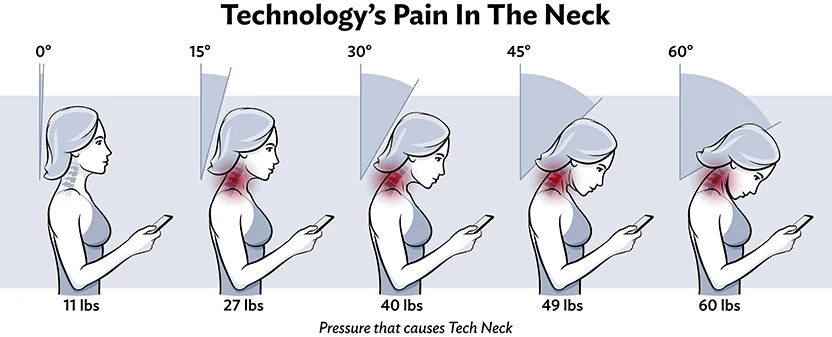
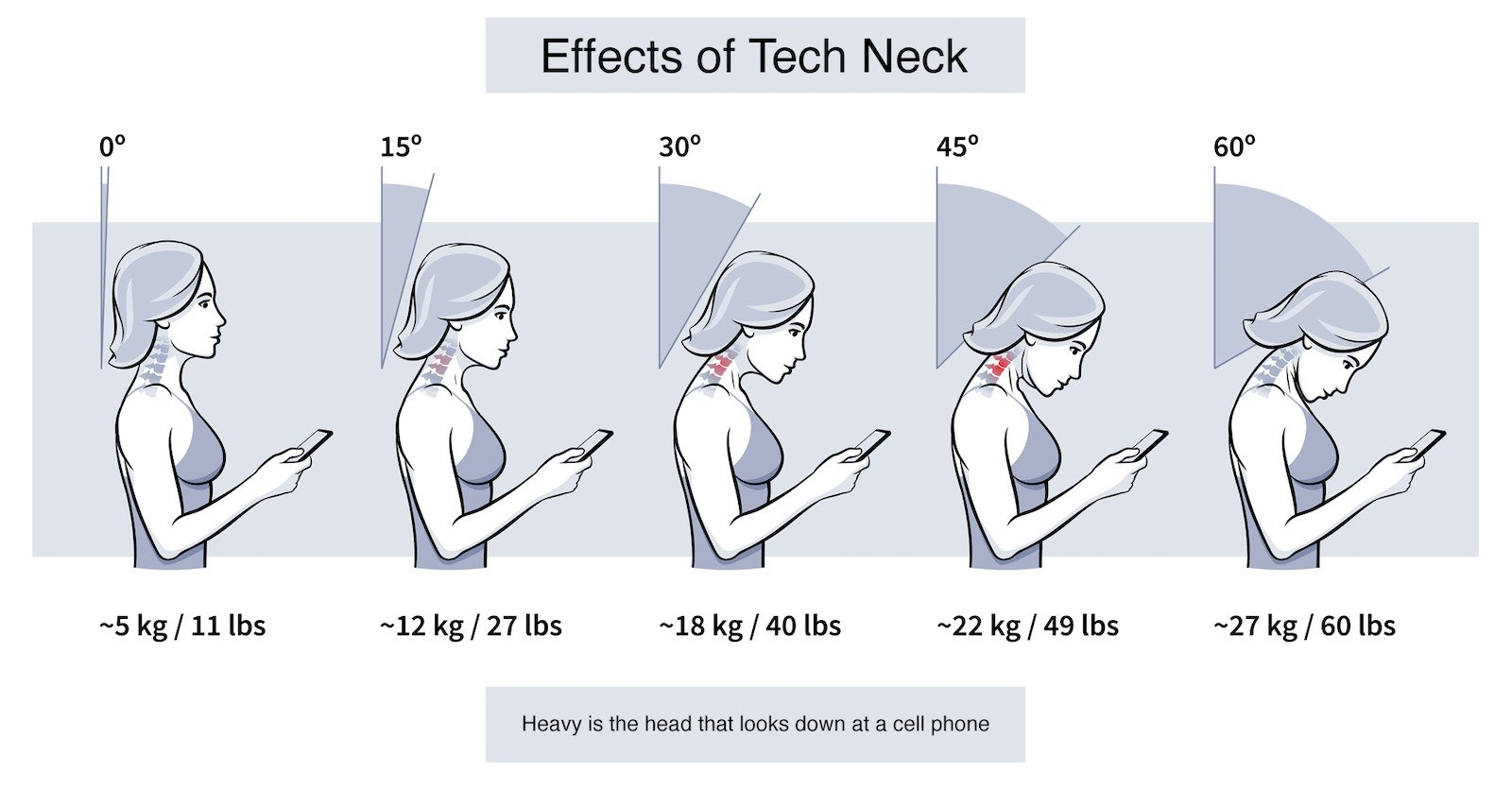
Here's how the load builds as the head tilts forward:
| Forward Tilt | Approximate Load on the Neck |
|---|---|
| 15° | ~12 kg |
| 30° | ~18 kg |
| 45° | ~22 kg |
| 60° | ~27 kg |
Sustained over hours, days, and years, this added mechanical stress leads to muscle fatigue, joint stiffness, and — left unaddressed — chronic cervical pain and postural dysfunction.
Everyday Smartphone Habits That Quietly Damage Your Neck
Most people develop tech neck without realizing which daily habits are driving it. The most common culprits include:
1. Looking Down for Extended Periods
Holding your phone below eye level forces the cervical spine into sustained forward flexion, placing continuous load on the muscles and ligaments that support your neck.
2. Marathon Screen Sessions Without Breaks
Uninterrupted scrolling, gaming, or texting gives your neck and shoulder muscles no opportunity to recover, leading to cumulative fatigue and stiffness.
3. Slouched Sitting Posture
Using your phone while slumped on a sofa or in bed compounds the strain — your neck, shoulders, and upper back all absorb the extra load together.
4. One-Handed Phone Use
Repeatedly holding a device in one hand over long periods can create muscular imbalances across the shoulders and upper back, contributing to one-sided discomfort.
5. Late-Night Phone Use in Bed
Awkward, unsupported neck positions combined with prolonged screen exposure before sleep can intensify neck pain and disrupt sleep quality.
Common Symptoms of Tech Neck to Watch For
Left unaddressed, early warning signs can progress into a chronic postural condition. Watch for:
- Persistent neck pain
- Tightness across the shoulders
- Upper back discomfort
- Reduced neck range of motion
- Frequent tension-type headaches
- Muscle spasms in the neck or upper back
- Tingling or numbness radiating into the arms (in more advanced cases)
- Rounded shoulders and visibly poor posture
If these symptoms persist beyond a couple of weeks, a proper physiotherapy assessment is strongly recommended.
How Physiotherapy Treats Tech Neck at the Root Cause
At SYMPHYSIO, physiotherapy for tech neck isn't about masking pain — it's about restoring healthy movement patterns and correcting the postural habits causing the problem in the first place.
Comprehensive Postural & Movement Assessment
We begin with a detailed evaluation of your posture, cervical range of motion, muscle strength, flexibility, and daily device habits to pinpoint exactly what's driving your symptoms.
Hands-On Pain Relief Techniques
Depending on clinical findings, treatment may include:
- Manual therapy
- Soft tissue release / massage
- Joint mobilisation
- Trigger point release
- Dry needling (where clinically appropriate)
- Heat or cold therapy
These techniques work together to reduce muscular tension, improve local circulation, and relieve pain.
Postural Correction Training
Poor posture is the single biggest driver of tech neck. We teach patients how to maintain a neutral cervical spine while using a smartphone, laptop, or tablet — small, consistent adjustments that meaningfully reduce daily strain on the neck.
Targeted Strengthening Exercises
Weak neck, shoulder, and upper back musculature struggles to hold proper posture over time. We prescribe targeted strengthening exercises to build the stability needed to support a healthier head-and-neck alignment.
Stretching for Tight, Overloaded Muscles
Regular, guided stretching helps release tightness in the neck, chest, and shoulder muscles — restoring mobility and reducing the stiffness caused by prolonged device use.
Practical Ergonomic Guidance
We also provide simple, actionable ergonomic advice, including:
- Holding your phone closer to eye level
- Taking regular movement breaks
- Adjusting your desk/workstation setup
- Using properly supportive seating
- Limiting continuous, uninterrupted screen time
Small lifestyle changes, applied consistently, often make the biggest long-term difference.
Prevention Tips: Protecting Your Neck From Smartphone Strain
Preventing tech neck is far easier than treating a chronic case. Build these habits into your daily routine:
- Hold your smartphone closer to eye level
- Avoid prolonged neck flexion
- Take a short movement break every 20–30 minutes
- Perform daily neck and shoulder stretches
- Maintain good sitting posture during device use
- Strengthen your upper back and shoulder muscles
- Avoid excessive phone use while lying in bed
- Stay physically active throughout the day
Consistency with these small habits significantly lowers your risk of developing chronic neck problems.
When Should You See a Physiotherapist for Neck Pain?
Occasional stiffness after a long day at the screen isn't unusual. But you should book a physiotherapy assessment if:
- Neck pain persists beyond one to two weeks
- The pain keeps returning
- You experience headaches linked to neck stiffness
- Neck movement becomes noticeably restricted
- Pain radiates into your shoulders or arms
- You notice numbness, tingling, or weakness
Early intervention prevents a minor postural issue from becoming a long-term musculoskeletal condition.
The SYMPHYSIO Approach to Tech Neck & Posture Correction
Smartphones have transformed how we communicate and work — but prolonged use places real, measurable strain on the neck and upper back. Building healthier device habits and maintaining good posture are essential to preventing tech neck before it becomes chronic.
At SYMPHYSIO Physiotherapy Clinic, Dr. Rahul Bhandari and our team offer a safe, evidence-informed, and fully personalised approach to relieving pain, correcting posture, restoring mobility, and strengthening the muscles that support your neck. By addressing the root cause rather than just the symptoms, physiotherapy not only helps you recover but also protects you from future flare-ups.
If your smartphone is becoming a literal pain in the neck, don't ignore the warning signs.
Visit us at Sarita Vihar, New Delhi — our physiotherapy team can help you move comfortably, correct your posture, and stay healthy in today's screen-first world.
Book Your Posture & Neck Pain Assessment
Ready to fix your tech neck for good? Book a consultation with SYMPHYSIO today and start correcting the posture patterns behind your pain.
Movement is Freedom.
Tags: Neck Pain, Shoulder Pain, Ergonomics, Smartphone Posture, Forward Head Posture, Posture & Chronic Pain, Physiotherapy Sarita Vihar
When is a text-neck label not enough?
Symptoms after screen use still deserve a history and examination when they persist or include arm symptoms. A clinician may check movement, strength and sensation and ask about sleep, work demands and recent injury.
Change positions regularly and bring the screen to a comfortable viewing height. Stop an exercise that clearly worsens symptoms and seek advice for new weakness or progressive neurological changes; do not diagnose them as mobile-neck syndrome yourself.
Discuss your symptoms with a physiotherapist
If symptoms affect everyday activity, explore assessment and physiotherapy options or book an appointment. This information cannot diagnose your symptoms; read our medical disclaimer.
References
These sources provide background guidance and research. Evidence and suitability vary by condition and technique; discuss benefits, risks and alternatives with your clinician.
General health information cannot diagnose your symptoms or replace individual medical advice. Do not delay urgent care for concerning symptoms. Read our medical disclaimer.
Book an assessment at Symphysio
Talk to our team in Sarita Vihar and get a plan built around your symptoms, not a fixed protocol.