Why Does Neck Pain Keep Coming Back?
Explore recurring neck pain, headaches and arm symptoms, practical changes to daily activity, and warning signs that call for a clinical assessment.

Written by Dr. Rahul Bhandari, PT, MPT (Sports)
Published July 25, 2026Last updated October 14, 20264 min read
In this article
Neck pain can return when everyday activity, sustained positions or recovery demands exceed what you currently tolerate. Headaches and arm tingling can have other causes too, so these symptoms do not establish one diagnosis.
For an individual assessment, see our neck cervical pain assessment and care.
Read our guide: Craniosacral therapy for headaches and migraine: what to know.
Read our guide: Cervical spondylosis and dizziness: can neck problems cause vertigo?.
Common Symptoms
- Neck stiffness after working on a computer
- Pain or catching while turning your head
- Headaches that start from the base of the neck
- Pain or tightness between the shoulder blades
- Tight, tender upper trapezius muscles
- Stiffness that's worse first thing in the morning
- Pain radiating towards the shoulder
- Fatigue and heaviness after prolonged sitting
If these symptoms keep returning despite temporary relief from massage or medication, it's usually a sign that the underlying movement problem hasn't actually been addressed yet.
Why Does Neck Pain Keep Coming Back? (Causes)
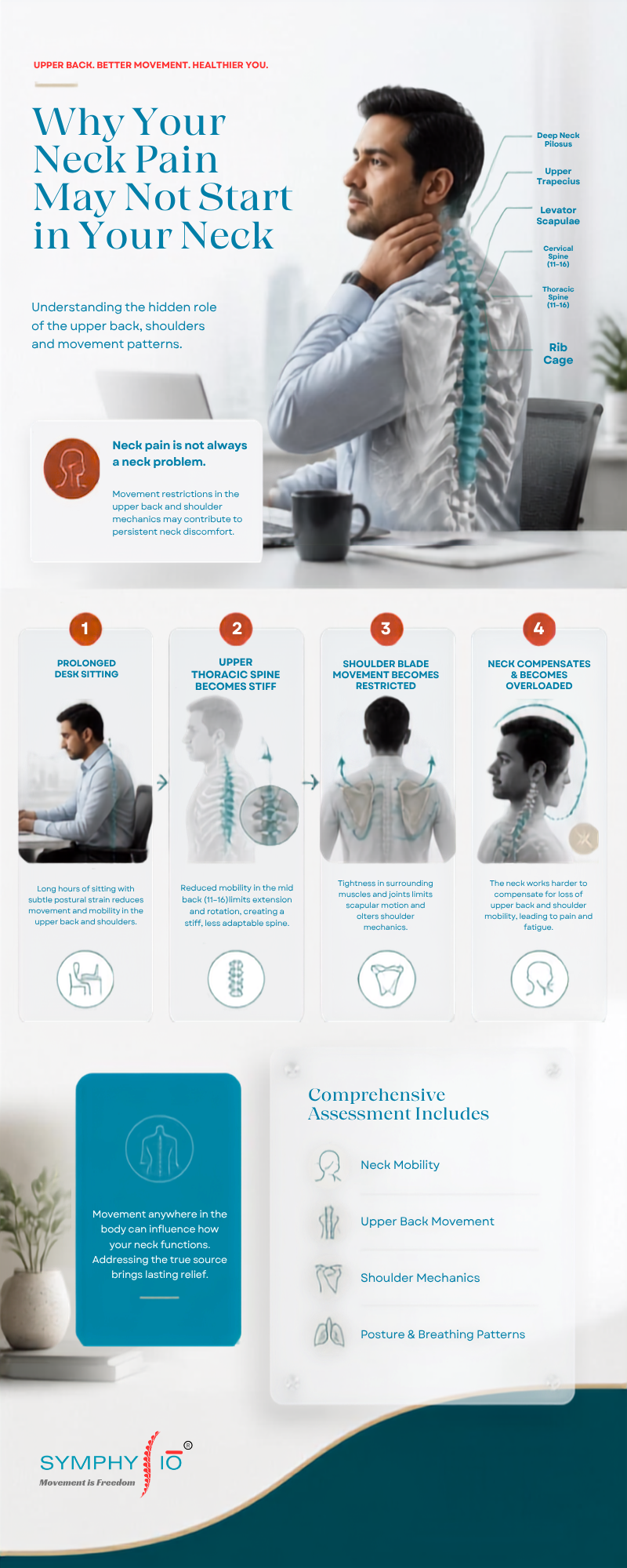
1. Reduced upper back mobility
The thoracic spine is designed to rotate and extend. When it becomes stiff from prolonged sitting or poor movement habits, the neck often compensates by moving more than it should — and over time that extra workload leads to irritation and discomfort.
2. Poor desk ergonomics
Long hours of laptop and phone use encourage a forward head posture, which sharply increases the load on the muscles supporting the neck — a major contributor to fatigue and pain that builds through the day.
3. Shoulder dysfunction
Restricted shoulder movement or weakness around the shoulder blade changes normal movement patterns and quietly increases strain on the cervical spine.
4. Breathing pattern changes
Many people unknowingly breathe using accessory neck muscles instead of the diaphragm, especially under stress — overactivity in these muscles can itself contribute to tightness and discomfort in the neck.
The Importance of a Thorough Assessment
Every patient is different, and two people with similar neck pain can have completely different underlying movement problems. A detailed physiotherapy assessment looks at neck mobility, thoracic spine movement, shoulder mechanics, muscle strength, posture, functional movement patterns, and the daily demands placed on your body — understanding these factors is what actually guides an individualised treatment plan, rather than a one-size-fits-all fix.
Treatment Options
Depending on assessment findings, physiotherapy for recurring neck pain may include:
- Hands-on manual therapy and joint mobilisation
- Soft tissue treatment for the upper trapezius and surrounding muscles
- Individualised exercise prescription to build capacity, not just flexibility
- Postural education specific to your work setup
- Ergonomic advice for desk and screen habits
- Movement retraining for the thoracic spine and shoulder
Research consistently supports combining education, targeted exercise, and manual therapy for mechanical neck pain — rather than relying on any single approach alone.
When Should You See a Physiotherapist?
Consider booking an assessment if:
- Neck pain has lasted more than two weeks
- The pain keeps returning after temporary relief
- You get frequent headaches linked to neck movement
- Stiffness is limiting daily activities
- Sitting at your desk consistently makes symptoms worse
- Pain is interfering with sleep or exercise
Early assessment can help stop a temporary problem from turning into a persistent one. Seek prompt medical evaluation instead if neck pain follows trauma, or comes with fever, unexplained weight loss, numbness, or weakness — those aren't signs a physiotherapist should assess first.
Prevention Tips for a Desk-Bound Day
- Get up and move every 45–60 minutes rather than sitting through back-to-back meetings
- Bring your screen up to eye level instead of tilting your neck down to it
- Build in a few minutes of thoracic mobility and chin-tuck exercises through the day
- Notice your breathing under stress — slow, diaphragmatic breathing takes load off the neck muscles
- Set up your workstation properly rather than working from a couch or bed for long stretches
Neck Pain Physiotherapy Near Apollo Hospital, Sarita Vihar
If you're experiencing persistent neck pain, recurring stiffness, or discomfort during work, a comprehensive physiotherapy assessment can identify what's actually contributing to it and guide a treatment plan built around you. Symphysio Physiotherapy Clinic, Sarita Vihar, sees patients from across Jasola, Okhla, Sukhdev Vihar, New Friends Colony, Kalindi Kunj, Badarpur, and the wider Apollo Hospital area of South Delhi.
Disclaimer: This article is intended for educational purposes only and should not be considered a substitute for professional medical advice, diagnosis, or treatment. If you have severe pain, trauma, fever, unexplained weight loss, numbness, weakness, or other concerning symptoms, seek prompt medical evaluation.
What do headaches or arm tingling mean?
A headache alongside neck stiffness may warrant checking neck movement, but not every headache starts in the neck. Tingling, numbness or weakness in an arm also needs assessment rather than being automatically labelled a posture problem.
Describe changes in sleep, desk work, driving, exercise and symptoms travelling into an arm. New or worsening weakness, walking or coordination problems, significant trauma, or a sudden unusual severe headache require prompt medical attention.
How should exercises fit into recovery?
Gentle movement, changes in activity and gradual strengthening can be tailored to your symptoms. A useful plan includes comfortable movement options and progress checks, rather than forcing a painful stretch or relying on one ideal posture throughout the day.
Discuss your symptoms with a physiotherapist
If symptoms affect everyday activity, explore assessment and physiotherapy options or book an appointment. This information cannot diagnose your symptoms; read our medical disclaimer.
Frequently Asked Questions
Posture is one contributing factor, but movement habits, muscle capacity, workload, stress, and overall physical health also play important roles. That's why fixing posture alone doesn't always resolve recurring neck pain on its own.
In most cases, staying appropriately active and following guided exercises is more beneficial than prolonged rest. Your physiotherapist can recommend specific activity modifications based on what your assessment finds.
No. While some people feel short-term relief from cracking or manipulation, long-term improvement depends on addressing the actual factors contributing to the pain — mobility, strength, posture, and movement habits.
It varies by cause, but many patients notice a meaningful reduction in frequency and intensity within 2–4 weeks of a targeted programme, with fuller resolution over 6–8 weeks as strength and movement habits improve.
Yes. Stress often changes breathing patterns and increases tension in the neck and upper trapezius muscles, both of which can directly contribute to stiffness and pain even without any structural issue.
Usually not. Most mechanical neck pain can be assessed and treated without imaging. Imaging is reserved for cases with red-flag symptoms such as trauma, progressive weakness, or numbness — your physiotherapist will tell you if a referral is needed.
References
These sources provide background guidance and research. Evidence and suitability vary by condition and technique; discuss benefits, risks and alternatives with your clinician.
General health information cannot diagnose your symptoms or replace individual medical advice. Do not delay urgent care for concerning symptoms. Read our medical disclaimer.
Book an assessment at Symphysio
Talk to our team in Sarita Vihar and get a plan built around your symptoms, not a fixed protocol.