Can Gut Problems Cause Back Pain? What to Know
Explore questions about digestive symptoms and back pain, the limits of self-diagnosis, and when to seek medical advice before considering physiotherapy.

Written by Dr. Rahul Bhandari, PT, MPT (Sports)
Published September 4, 2026Last updated October 14, 202612 min read
In this article
Digestive symptoms and back pain can occur together, but that does not prove a gut cause or show that a particular manual therapy will help. New, persistent or concerning symptoms need medical evaluation before assumptions about referred pain.
For an individual assessment, see our visceral manipulation assessment and care.
Read our guide: What is visceral manipulation? Benefits, uses and safety.
If you have persistent symptoms, a proper clinical assessment is important. At Symphysio physiotherapy clinic in Sarita Vihar, New Delhi, Dr. Rahul Bhandari physiotherapist uses a manual-therapy-based approach to assess movement, muscles, joints, breathing patterns, and relevant soft tissues before deciding what treatment is appropriate.
What is the Gut-Spine Connection?
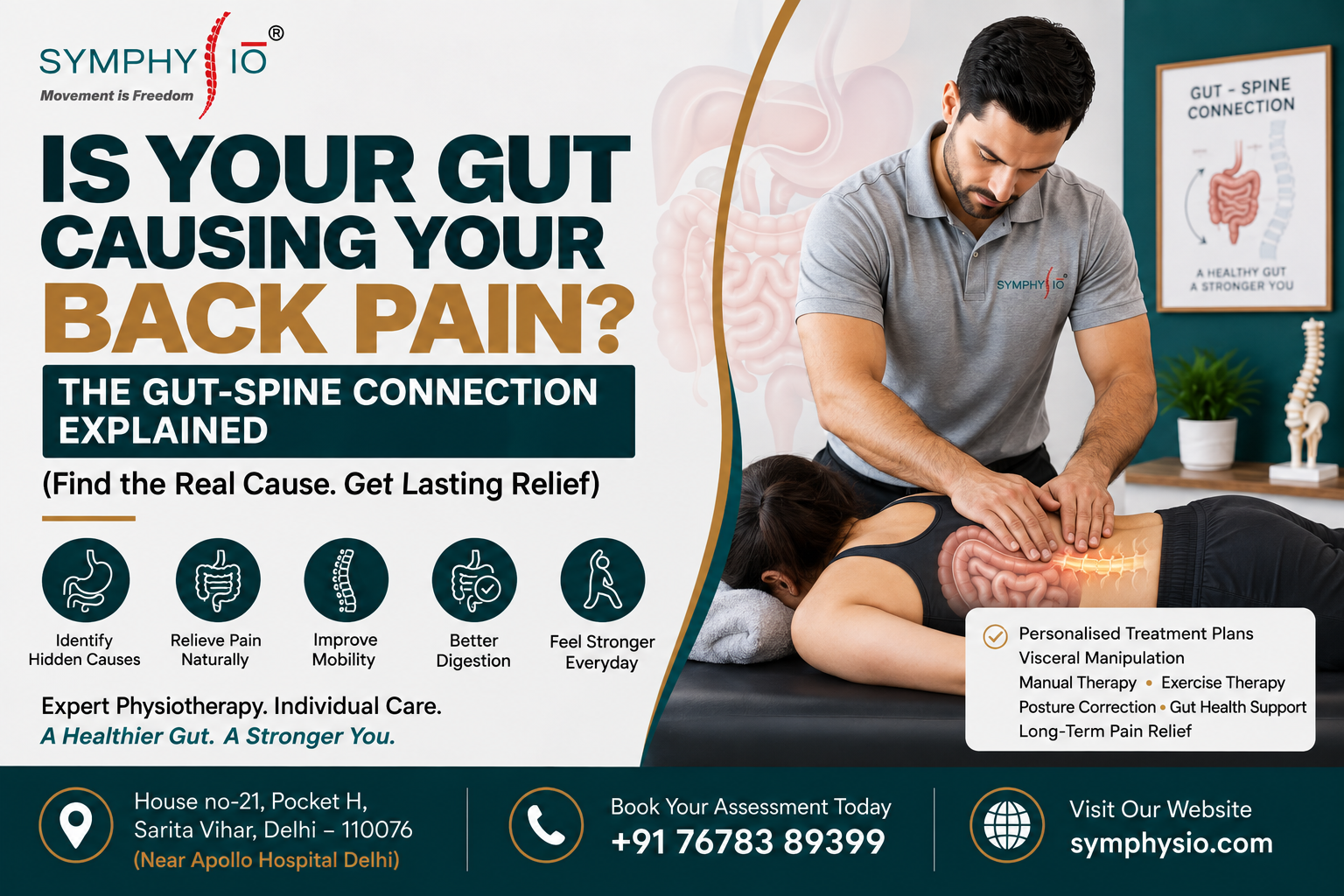
The "gut-spine connection" is not a single anatomical pathway or a diagnosis. It is a way of understanding how the digestive system, abdominal tissues, nervous system, breathing mechanics, pelvis, and spine can influence one another.
Your brain continuously receives information from different parts of your body. The digestive organs and abdominal tissues have their own sensory nerve supply, while the muscles and joints around the spine also send information to the nervous system. When an area becomes irritated or sensitive, the brain can sometimes interpret signals in ways that make the location of discomfort less obvious.
There is also a mechanical relationship.
The abdomen, diaphragm, pelvis, and lower back work together during breathing and everyday movement. The diaphragm changes pressure inside the abdomen as you breathe. Abdominal muscles help stabilize the trunk. The pelvic floor contributes to pressure management and movement. The spine provides the central support around which these structures coordinate.
This means digestive discomfort can sometimes affect how a person moves or braces their trunk. For example, someone experiencing bloating or abdominal discomfort may unconsciously tense their abdominal muscles, alter their breathing, or avoid certain movements. Over time, those changes can contribute to muscular overload or sensitivity around the lower back.
However, this does not mean that every episode of back pain is caused by the gut. Common musculoskeletal causes remain important and include muscle strain, joint irritation, disc-related problems, reduced mobility, prolonged sitting, and changes in activity.
The goal is not to replace a spinal assessment with a digestive explanation. It is to consider the complete clinical picture.
How Organ Dysfunction Can Mimic Back Pain
One concept that can be confusing is referred pain.
Referred pain occurs when discomfort originating in one area is felt somewhere else. The nervous system can receive signals from different structures that enter overlapping pathways, which can make the exact source of pain difficult to identify based on location alone.
This is sometimes described as organ referred pain back when discomfort associated with an internal organ is perceived in the back or surrounding regions.
For example, certain internal medical conditions can produce abdominal or back pain. Kidney problems, gallbladder disease, gastrointestinal conditions, and other disorders can sometimes present with pain outside the organ itself. These conditions require medical evaluation rather than physiotherapy treatment alone.
There is another, more common situation: digestive symptoms may change the way a person moves.
Consider someone who has recurring abdominal bloating. When the abdomen feels uncomfortable, they may brace their trunk more than usual. They may breathe more shallowly, sit differently, or stop rotating their spine because movement feels uncomfortable. If that pattern continues, the muscles around the lower back and pelvis may become overloaded.
This can create a cycle:
Digestive discomfort → protective tension → altered movement → increased muscular load → back pain or sensitivity.
Breaking that cycle may involve improving movement, breathing, strength, activity tolerance, and symptom management. Depending on the assessment, manual therapy can sometimes be included as one part of a broader rehabilitation plan.
It is important to distinguish this from claiming that a "weak gut" or "toxic digestive system" directly causes back pain. Those claims are overly simplistic and are not a substitute for diagnosis.
Signs Your Back Pain May Be Gut-Related
There is no single symptom that proves your back pain is coming from the digestive system. However, certain patterns may be worth discussing with a qualified healthcare professional.
You may want to mention the digestive component during your assessment if:
- Your back pain without injury repeatedly appears at the same time as bloating, constipation, diarrhea, abdominal discomfort, or changes in bowel habits.
- Your back symptoms seem to fluctuate with meals or periods of digestive discomfort.
- You notice abdominal tension or bloating alongside lower back stiffness.
- Your symptoms change when your abdominal or breathing pattern changes.
- You have recurring back discomfort despite addressing obvious ergonomic or activity-related factors.
- Your pain feels difficult to explain based only on your spinal movements.
- You have both digestive and musculoskeletal symptoms and want a whole-body assessment.
- You have persistent back pain and conventional approaches have not fully addressed your movement-related symptoms.
These signs do not establish a diagnosis. They simply provide useful information for your clinician.
When Back Pain Needs Medical Attention
Some back or abdominal symptoms should not be treated as a routine physiotherapy problem.
Seek prompt medical assessment if back pain is accompanied by symptoms such as:
- Severe or rapidly worsening abdominal or back pain
- Fever or feeling acutely unwell
- Unexplained weight loss
- Blood in the stool or urine
- Persistent vomiting
- New bladder or bowel control problems
- Numbness around the groin or saddle region
- Significant weakness in the legs
- Pain following major trauma
- Other symptoms that feel unusual, severe, or concerning
A physiotherapist can help with many musculoskeletal presentations, but serious medical causes need appropriate medical evaluation.
What is Visceral Manipulation and How Does It Help?
Visceral manipulation is a hands-on manual therapy approach that focuses on mobility and sensitivity of tissues associated with the body's internal organs and surrounding connective tissues.
The term "visceral" refers to internal organs. "Manipulation" in this context refers to specific hands-on techniques intended to assess and influence tissue movement and sensitivity.
It is sometimes discussed as an option for people with complex musculoskeletal symptoms, particularly when symptoms appear to involve the abdomen, breathing mechanics, pelvic region, or movement restrictions.
In Delhi, people searching for visceral manipulation Delhi may encounter many different claims about the technique. It is important to keep expectations realistic.
Visceral manipulation should not be presented as a cure for digestive disease, and it should not replace medical treatment for diagnosed gastrointestinal or organ conditions. Evidence for visceral manipulation varies by condition, and it is best considered as a possible component of a broader clinical approach rather than a universal solution for back pain.
A physiotherapist may assess:
- How the spine and pelvis move
- Abdominal and trunk muscle activity
- Breathing mechanics
- Rib and diaphragm movement
- Mobility and sensitivity of relevant soft tissues
- Hip and thoracic spine movement
- The relationship between symptoms and daily activities
- Strength, endurance, and overall movement capacity
If manual therapy is appropriate, it is generally used alongside active rehabilitation rather than instead of it.
The larger objective is better function and sustainable chronic back pain relief, not simply temporary reduction in symptoms after a hands-on session.
How Dr. Rahul Bhandari Approaches This at Symphysio
At Symphysio physiotherapy clinic, the approach begins with assessment rather than assuming that every patient needs the same treatment.
Dr. Rahul Bhandari physiotherapist focuses on understanding the patient's history, symptom behavior, movement patterns, and functional limitations. If digestive symptoms are part of the story, they can be considered as one piece of the clinical picture.
A typical assessment may explore:
- Your symptom history
When did the pain start? Was there an injury? What makes it better or worse? Does it vary during the day? - Your digestive symptoms
If relevant, the physiotherapist may ask about bloating, abdominal discomfort, bowel changes, or relationships you have noticed between digestion and musculoskeletal symptoms. - Spinal and joint movement
The clinician checks how your lumbar spine, pelvis, hips, and surrounding regions move. - Muscle function
Strength, endurance, coordination, and protective muscle tension can all be relevant. - Breathing and trunk mechanics
Breathing is closely connected with the diaphragm, rib cage, abdominal wall, and pressure management. - Manual therapy where appropriate
Depending on the findings, hands-on techniques may be used to address mobility, sensitivity, or muscular restrictions. - Active rehabilitation
Exercises, movement retraining, strength work, and practical advice can help turn short-term improvements into longer-term progress.
This is the philosophy behind combining manual therapy Delhi patients may seek with active physiotherapy. Hands-on treatment can be useful, but it is rarely the entire answer.
For patients searching for a back pain specialist Delhi NCR, the most useful starting point is often a clinician who can identify whether the symptoms are mechanical, referred, medical, or a combination of factors.
Who Should Consider This Treatment?
A whole-body physiotherapy assessment may be worth considering if you have:
- Recurrent lower back pain with no clear injury
- Back pain that repeatedly accompanies digestive discomfort
- Persistent back pain despite basic stretching or rest
- Stiffness or muscular tension around the lower back and pelvis
- Symptoms that change with breathing, posture, movement, or abdominal tension
- A history of recurring musculoskeletal problems where multiple factors appear involved
- A desire for a more individualized rehabilitation plan
This may be particularly relevant for people looking for a physiotherapist in Sarita Vihar, physiotherapy clinic near Jasola, or physiotherapy near Okhla.
Treatment should still be individualized. A person with a confirmed disc problem may need a very different rehabilitation program from someone whose primary issue is movement-related muscular pain.
If you are specifically looking for slip disc treatment Delhi, it is important not to assume that visceral techniques are appropriate simply because you also have digestive symptoms. A disc-related presentation needs its own assessment and management strategy.
Patient Recovery Example
Anonymous Case Study: "A Backache That Wasn't Just About the Back"
A 36-year-old office professional visited a physiotherapy clinic with approximately four months of recurring lower back discomfort.
There had been no major injury. The symptoms were worse after long periods of sitting, but the patient also noticed that the back felt particularly tight during episodes of bloating and constipation.
Initially, the patient had tried stretching and reducing activity. This provided temporary relief, but the symptoms kept returning.
During the assessment, the physiotherapist looked beyond the painful area. There was reduced hip and thoracic mobility, increased trunk tension, and a tendency to brace during breathing and movement. The patient's digestive symptoms were also discussed as part of the history.
The treatment plan did not assume that the gut was the sole cause of the back pain.
Instead, it included:
- Education about the relationship between symptoms and movement
- Gentle manual therapy based on the assessment
- Breathing and trunk coordination exercises
- Hip and thoracic mobility work
- Progressive strengthening
- Gradual improvement in sitting and activity tolerance
- Advice to seek medical evaluation if digestive symptoms changed or became concerning
Over the following weeks, the patient reported fewer episodes of back stiffness and improved confidence with daily movement.
The important lesson is not that visceral manipulation "cured" the digestive problem or that the gut was proven to be the cause of the back pain. Rather, the case illustrates why persistent back pain treatment can benefit from looking at multiple contributing factors instead of focusing only on the painful spot.
Individual results vary, and a case study cannot predict how another patient will respond.
Physiotherapy for Digestive Issues: What Can and Can't It Do?
The phrase physiotherapy for digestive issues can be misunderstood.
Physiotherapists do not replace gastroenterologists or physicians when a digestive disease needs diagnosis or medical management. However, physiotherapy may have a role in certain musculoskeletal or functional problems that coexist with digestive symptoms.
Depending on the individual's presentation, physiotherapy may address:
- Abdominal and pelvic muscle coordination
- Breathing mechanics
- Trunk and spinal mobility
- Postural and movement habits
- Musculoskeletal pain associated with guarding or reduced activity
- Recovery of normal movement after periods of discomfort
If you have unexplained digestive symptoms, the first step should be appropriate medical evaluation. Physiotherapy can then be considered where it has a relevant role.
Gut and Back Pain Connection: What Does the Science Actually Mean?
It is tempting to search online for a simple explanation such as "gut inflammation causes lower back pain." Real physiology is more nuanced.
The gut communicates with the nervous system through multiple pathways, and the body responds to pain, stress, movement, breathing, and internal sensations as an interconnected system. At the same time, digestive diseases can cause genuine referred pain or systemic symptoms.
But association is not proof of causation.
If your back pain and digestive symptoms occur together, a good clinical approach asks:
- Is there a recognizable musculoskeletal source?
- Are there signs of nerve involvement?
- Could the symptoms be referred from another structure?
- Are there medical warning signs?
- Does movement reproduce or reduce the symptoms?
- What other factors influence the person's recovery?
This type of reasoning is much more useful than assigning every unexplained backache to the gut.
Conclusion: Look Beyond the Painful Spot
The gut and spine do not operate in isolation. Digestive symptoms, breathing mechanics, abdominal tension, movement patterns, the nervous system, and spinal function can interact in complex ways.
But the key takeaway is simple: back pain should be assessed rather than guessed at.
If your symptoms include recurring digestive discomfort, unexplained lower back pain, or persistent stiffness, a whole-body physiotherapy assessment may help identify the factors contributing to your symptoms. At the same time, concerning digestive or neurological symptoms should receive appropriate medical evaluation.
If you're looking for the best physiotherapist in South Delhi for an individualized assessment, or searching for back pain treatment in Delhi, persistent back pain treatment, or manual therapy Delhi, consider speaking with Dr. Rahul Bhandari at Symphysio, Sarita Vihar.
Book an assessment with Dr. Rahul Bhandari at Symphysio: Book an appointment
Your back pain may have more than one contributing factor. The right first step is finding out what is actually driving it.
Discuss your symptoms with a physiotherapist
If symptoms affect everyday activity, explore assessment and physiotherapy options or book an appointment. This information cannot diagnose your symptoms; read our medical disclaimer.
Frequently Asked Questions
Some digestive or internal medical conditions can cause pain that is felt in the back, while digestive discomfort can also influence movement and muscle tension. However, most lower back pain should not automatically be attributed to the gut. A proper assessment is important.
The gut and musculoskeletal system interact through the nervous system, breathing mechanics, abdominal pressure, movement, and protective muscle activity. Digestive symptoms may sometimes coexist with or contribute to changes in movement and back sensitivity, but the relationship is not the same for everyone.
It can help when there is a relevant musculoskeletal component. Physiotherapy may address movement restrictions, muscle tension, breathing mechanics, strength, and activity tolerance. Digestive disease itself may require medical or specialist care.
Visceral manipulation is a hands-on therapy approach involving assessment and treatment of mobility and sensitivity in tissues associated with internal organs and surrounding structures. Evidence varies depending on the condition, so it should be considered an adjunct rather than a guaranteed treatment or cure.
No. It is not automatically appropriate for every person with back pain. The clinician should first determine whether the symptoms are suitable for physiotherapy and whether other medical assessment is needed.
Yes. Back pain without injury is common. It may be associated with changes in activity, prolonged sitting, muscle overload, reduced conditioning, joint sensitivity, disc-related problems, or other factors. Sometimes the cause is not immediately obvious.
Consider an assessment if your symptoms keep returning, interfere with work or sleep, limit activity, or have not improved with reasonable self-management. If you have severe symptoms or red flags such as significant weakness, bladder or bowel changes, fever, unexplained weight loss, or major trauma, seek appropriate medical care promptly.
If you are based in South Delhi, you can consider an assessment at Symphysio physiotherapy clinic in Sarita Vihar. The appropriate treatment depends on the findings of your individual assessment.
If you are searching for a physiotherapy clinic near Jasola or physiotherapy near Okhla, Symphysio in Sarita Vihar may be a convenient option. Contact the clinic to discuss your symptoms and whether an assessment is appropriate.
Manual therapy can be useful for some people as part of a broader rehabilitation plan. For longer-term chronic back pain relief, it is generally more useful when combined with appropriate exercise, education, movement retraining, and gradual return to normal activity.
References
These sources provide background guidance and research. Evidence and suitability vary by condition and technique; discuss benefits, risks and alternatives with your clinician.
General health information cannot diagnose your symptoms or replace individual medical advice. Do not delay urgent care for concerning symptoms. Read our medical disclaimer.
Book an assessment at Symphysio
Talk to our team in Sarita Vihar and get a plan built around your symptoms, not a fixed protocol.