Dry Needling vs Acupuncture: What Is the Difference?
Dry needling and acupuncture both use needles but differ in their underlying approach and clinical context. Ask a qualified clinician about suitability.

Written by Dr. Rahul Bhandari, PT, MPT (Sports)
Published August 29, 2026Last updated October 14, 202610 min read
In this article
Dry needling and acupuncture both use needles but differ in their underlying approach and clinical context. Ask a qualified clinician about suitability, possible risks and alternatives before choosing either.
For an individual assessment, see our dry needling assessment and care.
For people dealing with persistent muscle pain, tightness or movement-related symptoms, dry needling can sound intimidating at first. Many are curious, but worried about whether it hurts, whether it is safe and what actually happens during a session.
If you are searching for dry needling near me in Delhi, understanding the treatment before booking can make the decision much easier.
At SymPhysio, dry needling is considered as part of an individual physiotherapy assessment and treatment plan. It is not simply about inserting a needle into a painful area. The treatment, if appropriate, should be selected according to your symptoms, clinical findings and overall rehabilitation goals.
What Is Dry Needling?
Dry needling is a technique in which a trained practitioner uses a thin, solid filiform needle to target specific muscles or other relevant soft-tissue structures.
The word “dry” means that nothing is injected through the needle. There is no medication or fluid being delivered.
In physiotherapy practice, dry needling is commonly considered for selected musculoskeletal pain and movement problems, particularly when muscle sensitivity or trigger points may be contributing to symptoms.
A treatment session may involve targeting:
- Painful or sensitive muscle areas
- Myofascial trigger points
- Muscles showing increased tone or guarding
- Specific areas identified during clinical assessment
The needle is only one part of the treatment process. Depending on your condition, rehabilitation may also include:
- Movement and mobility exercises
- Progressive strengthening
- Manual therapy where appropriate
- Load and activity modification
- Posture or ergonomic guidance
- A home exercise programme
The goal is not simply temporary pain relief. Where dry needling is appropriate, it is generally used to support a broader rehabilitation plan.
Is Dry Needling the Same as Acupuncture?
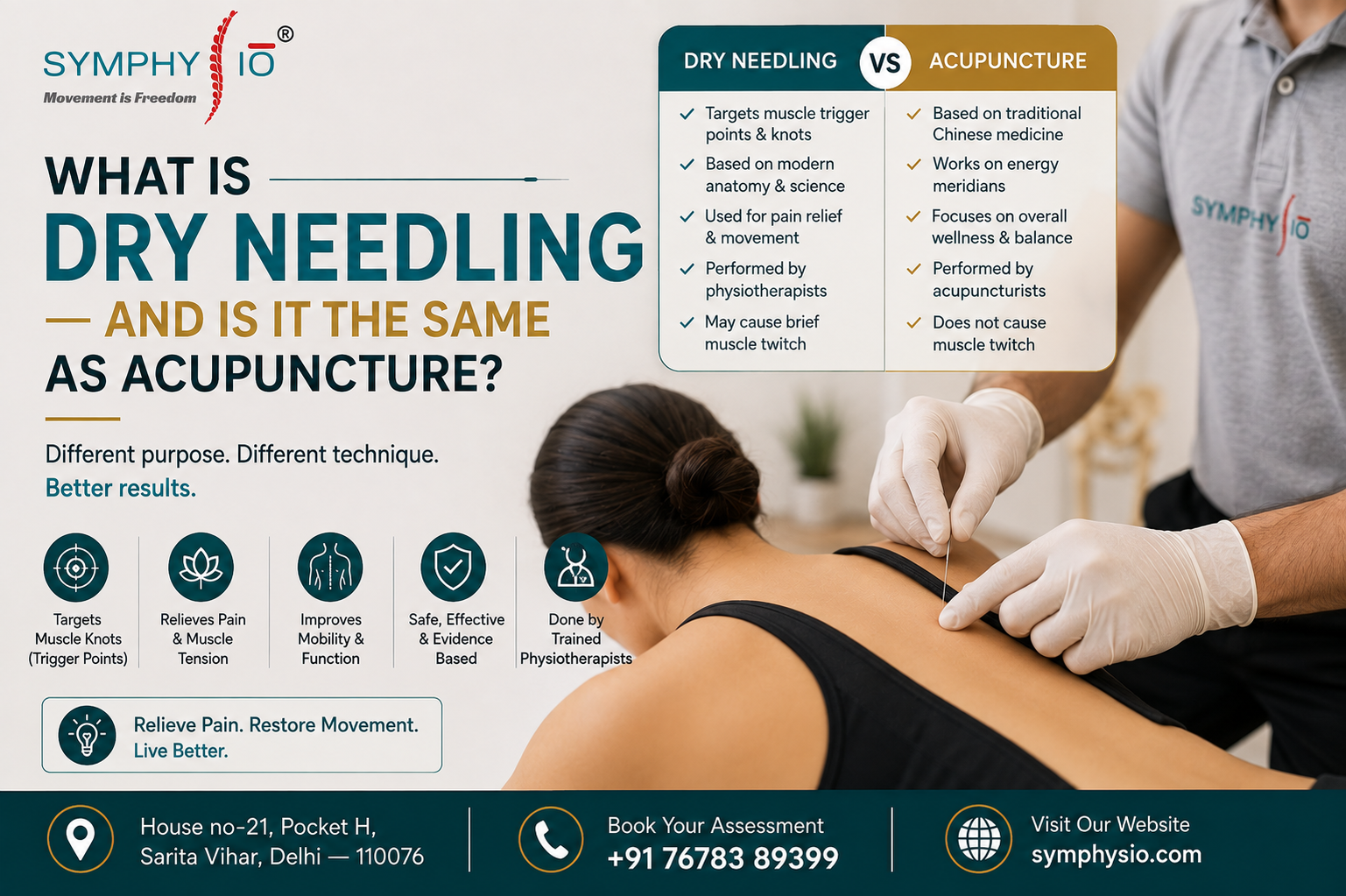
No. Although both may use similar-looking needles, they are based on different treatment frameworks.
Acupuncture is a traditional treatment approach with its own theoretical foundations and systems for selecting treatment points.
Dry needling, as used in musculoskeletal practice, is generally based on a modern clinical assessment of pain, movement, muscle function and relevant anatomical structures.
The 3 Key Differences
1. The treatment framework is different
Acupuncture is based on its own traditional and modern medical frameworks, depending on the style and practitioner.
Dry needling in physiotherapy is generally used within a musculoskeletal assessment and rehabilitation framework. The practitioner considers symptoms, movement, muscle findings and functional limitations when deciding whether needling may be appropriate.
2. The treatment targets are selected differently
Acupuncture treatment points are selected according to the practitioner's acupuncture approach.
Dry needling commonly focuses on specific muscles, trigger points or other clinically relevant soft-tissue structures related to the patient's musculoskeletal presentation.
For example, if you have persistent shoulder pain, the assessment may identify particular muscles that are sensitive or contributing to restricted movement. The treatment plan may then address those findings alongside exercise and other rehabilitation strategies.
3. The overall treatment goal is different
Dry needling is commonly used with goals such as helping manage selected musculoskeletal symptoms, reducing pain sensitivity, improving short-term movement tolerance or addressing specific muscle-related findings.
Acupuncture may be used for a broader range of goals depending on the style of practice and clinical context.
The important point is this: the needles may look similar, but the assessment, rationale and treatment framework are not automatically the same.
Dry Needling vs Acupuncture: Quick Comparison
| Feature | Dry Needling | Acupuncture |
|---|---|---|
| Needle used | Typically a thin, solid filiform needle | Typically a thin, solid needle |
| Injection involved? | No medication or fluid is injected | No medication or fluid is typically injected through the acupuncture needle |
| Clinical framework | Commonly used within musculoskeletal and movement assessment | Based on acupuncture theory and practice frameworks |
| Point selection | Often based on muscles, trigger points and relevant anatomy | Based on the practitioner's acupuncture system and treatment approach |
| Typical focus | Selected musculoskeletal pain and movement problems | Varies according to the acupuncture approach and clinical goals |
| Used with exercise? | Often part of a broader physiotherapy rehabilitation plan | Depends on the practitioner and treatment setting |
What Conditions Can Dry Needling Be Used For?
Dry needling is not a universal treatment for every type of pain. It may be considered when your assessment suggests that it could be useful as part of a wider plan.
A physiotherapist may consider dry needling for selected cases involving:
Neck and shoulder muscle pain
Persistent tightness and pain around the neck and shoulders can affect desk workers, drivers, athletes and people who spend long periods in sustained positions.
If a clinical assessment identifies relevant muscle sensitivity or trigger points, dry needling may be considered alongside exercise and movement rehabilitation.
Back pain
People searching for dry needling for back pain near me often want fast relief from persistent muscular tightness.
Dry needling may be considered for selected muscle-related components of back pain, but not every back problem should be treated with needling. Disc-related symptoms, nerve symptoms and other causes require their own assessment and management.
Trigger point-related muscle pain
A trigger point is often described as a sensitive area within a muscle that can be painful when pressed and may be associated with a familiar pain pattern.
Trigger point findings should be interpreted as part of the complete clinical picture rather than treated as the only explanation for pain.
For people looking for trigger point therapy in Delhi, an assessment can help determine whether dry needling, manual therapy, exercise or a combination of approaches is appropriate.
Sports and activity-related muscle problems
Muscle overload, local pain and restricted movement can occur when training volume or physical demands exceed what the body currently tolerates.
Dry needling may be used in selected cases, alongside progressive loading and rehabilitation designed to address the reason symptoms developed.
Hip, gluteal and lower-limb muscle pain
Certain muscular pain patterns around the hip, buttock or lower limb may also be assessed for dry needling as part of physiotherapy.
Again, treatment depends on the actual source of symptoms. Pain in a muscle area does not automatically mean the muscle itself is the only problem.
What Does Dry Needling Feel Like? Does It Hurt?
This is one of the most common concerns.
People can experience dry needling differently. Some feel a brief prick as the needle enters the skin. Others notice a twitch response or a short, cramping sensation when a sensitive muscle area is stimulated.
After treatment, the area may feel sore or bruised for a short period. The amount of soreness varies from person to person and depends on the area treated and the individual's response.
You should tell your physiotherapist if you are uncomfortable, anxious about needles or experience unusual symptoms during treatment.
Dry needling should always be performed by an appropriately trained and qualified practitioner using proper clinical hygiene and safety procedures.
What to Expect During a Session at SymPhysio
If you book physiotherapy with needling in South Delhi, the first step should be an assessment, not immediate treatment based only on a symptom description.
A typical process may include:
1. Understanding your symptoms
Your physiotherapist will discuss:
- Where the pain is located
- When it started
- What makes it better or worse
- Your work, exercise and activity demands
- Previous injuries or treatment
- Relevant medical history
- Any factors that may affect treatment safety
2. Physical assessment
Depending on your symptoms, the assessment may include:
- Movement testing
- Muscle strength testing
- Palpation where appropriate
- Functional testing
- Relevant neurological screening
- Assessment of pain behaviour and symptom irritability
This helps determine whether your symptoms appear suitable for physiotherapy and whether dry needling is relevant.
3. Discussion and informed consent
Before treatment, the practitioner should explain:
- Why dry needling is being considered
- The expected benefits and limitations
- Possible side effects and risks
- Alternatives to needling
- What you may feel during and after treatment
You should have the opportunity to ask questions and decide whether you want to proceed.
4. The treatment itself
If dry needling is appropriate and you consent, the practitioner uses sterile single-use needles and follows appropriate safety procedures.
The number and location of needles depend on the treatment plan. Some techniques involve brief needle insertion, while others may leave needles in place for a limited period.
5. Reassessment and active rehabilitation
After treatment, your symptoms or movement may be reassessed.
You may also be given specific exercises, movement advice or activity guidance. This is important because dry needling alone does not replace the work of restoring strength, movement and tolerance to daily activities.
Is Dry Needling Safe?
When performed by an appropriately trained practitioner, with proper patient selection, informed consent and safety procedures, dry needling is generally considered a minimally invasive treatment.
However, “safe” does not mean risk-free.
Possible side effects can include:
- Temporary soreness
- Minor bleeding
- Bruising
- Temporary increase in local symptoms
- Light-headedness or fainting in susceptible individuals
Rare but potentially serious complications can occur depending on the area being treated. For example, needling near the chest or upper back requires particular anatomical knowledge and safety precautions.
That is why people searching “is dry needling safe Delhi?” should focus not only on finding a nearby clinic but also on ensuring that the practitioner is appropriately qualified, assesses them properly and discusses risks before treatment.
Who Is Dry Needling NOT For?
Dry needling is not automatically suitable for everyone.
A practitioner should screen for factors that may make treatment unsuitable or require extra precautions. Depending on the individual and local clinical guidelines, these may include:
- Certain bleeding or clotting problems
- Use of medications that significantly affect bleeding risk
- Local skin infection or other infection concerns
- Severe needle phobia or inability to provide informed consent
- Certain medical conditions requiring modified treatment
- Areas where needling may present unacceptable risk
- Pregnancy-related considerations depending on the treatment area and clinical circumstances
This is not a complete list.
Never decide for yourself that dry needling is safe simply because someone else had the treatment. Your medical history, symptoms and treatment area all matter.
Tell your physiotherapist about medications, bleeding issues, pregnancy, recent illness, infections, allergies and any relevant medical conditions before treatment.
Dry Needling Is Not Always the Answer — And That Is a Good Thing
A good physiotherapy plan should not force every problem into the same treatment.
You may come in expecting dry needling because a friend recommended it. After assessment, your physiotherapist may decide that another approach is more appropriate.
For some patients, the priority may be:
- Progressive strengthening
- Spinal or joint movement rehabilitation
- Nerve-related symptom management
- Activity modification
- Ergonomic changes
- Load management
- Medical referral for further evaluation
The goal is to choose the treatment that fits your problem, not to fit your problem around one treatment.
Key Takeaways
Dry needling and acupuncture may both use thin needles, but they are not the same treatment approach. Dry needling is commonly used within a musculoskeletal assessment and physiotherapy rehabilitation framework, often targeting selected muscles or trigger point-related findings. It may be useful for some people with certain muscle-related pain and movement problems, but it is not suitable for every condition or every patient.
The most important question is not simply “Should I get dry needling?” It is “What is causing my symptoms, and is dry needling appropriate as part of my treatment plan?”
Discuss your symptoms with a physiotherapist
If symptoms affect everyday activity, explore assessment and physiotherapy options or book an appointment. This information cannot diagnose your symptoms; read our medical disclaimer.
Frequently Asked Questions
Dry needling may be considered for selected musculoskeletal pain and movement problems, particularly when a clinical assessment identifies relevant muscle sensitivity or trigger point-related findings. It is often used alongside exercise, rehabilitation and other physiotherapy strategies rather than as a standalone solution.
No. Both treatments may use thin, solid needles, but they differ in their treatment frameworks and approaches to selecting treatment points. Dry needling is commonly used within a musculoskeletal and physiotherapy assessment framework, while acupuncture follows its own treatment systems and theoretical foundations.
Sensations vary. Some people feel a brief prick, while others may experience a short twitch or cramping sensation in the muscle. Temporary soreness can occur afterwards. Tell your practitioner if you feel uncomfortable or anxious during treatment.
Dry needling can be performed safely by an appropriately trained practitioner who uses proper patient screening, informed consent, sterile equipment and appropriate safety procedures. However, it is not risk-free. Bruising, bleeding and temporary soreness can occur, and rare serious complications are possible depending on the treatment area.
Some people experience temporary soreness after treatment. The duration and intensity vary depending on the treatment area and individual response. Your physiotherapist can advise you on what to expect and what symptoms should prompt further contact.
There is no standard number for everyone. It depends on your diagnosis, symptom severity, response to treatment and rehabilitation goals. Your progress should be reassessed rather than assuming that every patient needs a fixed package of sessions.
It may be considered for selected muscle-related components of back pain. However, back pain can have many causes, including disc-related and nerve-related problems. A proper assessment is needed before deciding whether dry needling is appropriate.
Dry needling may be considered for selected muscle-related neck and shoulder symptoms. It is generally most useful when incorporated into an individual rehabilitation plan that may also include movement, strengthening and ergonomic guidance.
Some people may need to avoid dry needling or require special precautions because of factors such as certain bleeding disorders, medications affecting bleeding risk, local infection, inability to provide informed consent or other medical considerations. A practitioner should screen you individually before treatment.
Tell your physiotherapist about relevant medical conditions, medications, bleeding or clotting issues, pregnancy, recent illness, infections, allergies and previous reactions to needles or medical procedures. Ask about the expected benefits, possible risks and alternatives before giving consent.
References
These sources provide background guidance and research. Evidence and suitability vary by condition and technique; discuss benefits, risks and alternatives with your clinician.
General health information cannot diagnose your symptoms or replace individual medical advice. Do not delay urgent care for concerning symptoms. Read our medical disclaimer.
Book an assessment at Symphysio
Talk to our team in Sarita Vihar and get a plan built around your symptoms, not a fixed protocol.